A lot of limelight is given to the batsmen because
they score the all-important runs. But, it is a known fact that to win a test
match, you need the ability to take 20 wickets. Thus making bowling an equally
important job role in the game of cricket.
Seam bowling in India was always an issue. India is
known to produce batting legends. When it comes to seam bowling, there are only
a handful of bowlers who have made their presence felt. Most of the limelight
in the Indian bowling circuit was always shared by the spinners.
Today, one can say that the current Indian Seam
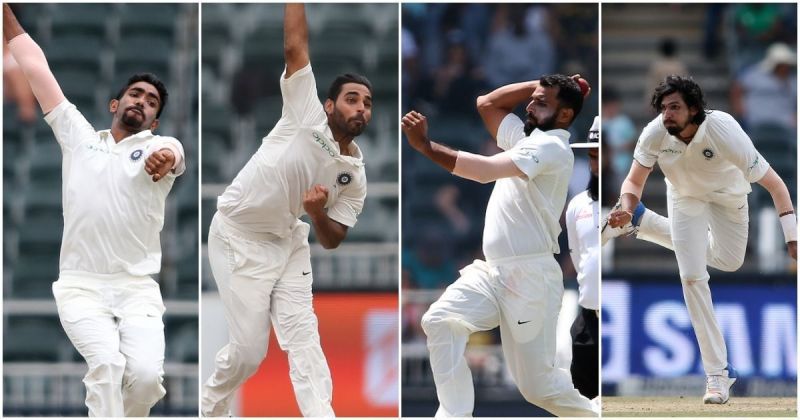
Bowling line-up with Bumrah, Shami, Kumar is the best that India ever had and
one of the finest in World Cricket at the moment.
Cultural Analysis
If we dig deeper into the roots of the game, we
will find that the game is mostly batting oriented. The reason behind this is
the fact that Indians have mostly had batsmen as their role models. We
definitely had the Haryana Hurricane, Kapil Dev as the earliest influencer but
the early adopters of the game were mostly influenced by batting.
If you had ever asked a kid from the late 1990s who would they want to be like, the answer would be Sachin Tendulkar, Sourav Ganguly, Rahul Dravid, VVS Laxman, and the list is never-ending. In fact, Sachin Tendulkar himself had the Little Master, Sunil Gavaskar as his role model. Imagine how difficult it was for the Indian team to passionate fast bowlers. Without any doubt, we have had champions like Kapil Dev, Javagal Srinath, Zaheer Khan, Ashish Nehra, Irfan Pathan, Venkatesh Prasad but never in the past we’ve had a deadly seam bowling line-up which could threaten the opposition at any point during the match.
Also, in Indian street cricket, getting a batsman
out is not an easy task. Hence, the bowlers try tricks with their fingers to
trouble the batsmen. This led to spin bowling become trendy in the Indian Culture.
People started valuing the spinners and their variations creating a high
demand. Also, the fact that spinners need not have to take a longer run-up was
a contributing factor. When the roots are spin oriented, it is evident that it
will have an impact on a broader scale. Thus, Indian cricket was gifted with
spin legends like Bishan Singh Bedi, Anil Kumble, Subhash Gupte, Bhagwath
Chandrasekhar, Harbhajan Singh, Erapalli Prasanna, etc.
Cultural Shift
In the early 21st Century, with Sourav Ganguly leading
the team with his vision to make India the best Team in the World, India was
able to identify seam bowling talents more often. Still, there was a lack of
role models and the job was not that easy. However, Ganguly managed to create a
decent bowling line-up. The spinners and the seam bowlers complemented each
other quite well in the set-up.
Though India managed to do well, there were no good
back-ups in case of an Injury. Ashish Nehra’s best bowling figure came in the
World Cup game against England and he wasn’t 100 percent fit. He could have
easily been rested if India had a decent enough back-up for him.
Also, fitness was an issue before. Zaheer Khan used to be India’s premium bowler in the overseas conditions. However, consistent injury forced India to replace Khan with a not so prepared bowler. This led to various series of defeat overseas.
Today, we can see a change in the trend. With the
emergence of bowlers like Bumrah and Shami and captain Virat Kohli’s emphasis
on fitness, we can see how deadly the Indian Seam bowling attack has become.
Touchwood, the lads have been able to keep up to their abilities and managed to
reduce the frequency of the injury comparatively.
This new Indian seam bowling line-up could be said
one of Virat Kohli’s greatest achievements as captain. They not only have been
able to generate fear into the minds of the opposition but have now become the
trendsetters.
Hopefully, the new bowling line-up can end up becoming the new influence of the game in India and attract the new generation of kids.
The moment becomes closer for Mahendra Singh Dhoni to call it a day. It will not come across as a shocker to most of us but it definitely is the end of childhood for a majority of cricket fans in India, especially the ones born in the 1990s.
I am not going to talk about statistics or analyze Dhoni’s performance in recent times. His record speaks for itself. This article is dedicated to the man who gave his everything for Indian cricket and never asked for anything in return.
Visionaries from the East
Cricket in India used to be mostly dominated by the West. There were players from the South and the North as well but the Eastern part of the country, i.e., Bengal, Bihar, Jharkhand, Odisha, Assam, etc., did not have many players in the national team.
The first person to make a significant name in the international level was the visionary, Sourav Ganguly, not only helped to build a new age team but taught India how to win matches abroad. The second person who took Ganguly’s legacy to the highest level was our unorthodox captain, MS Dhoni.
You don’t find players like Dhoni every day. There are three types of cricketers – hard working, talented and gifted – Dhoni falls in the gifted category. His unorthodox methods have taken India to the ultimate height in the limited-overs format.
Stars, Art Thou Shining?
Dhoni’s debut in the Indian team was delayed. While from the same batch of Yuvraj Singh, Mohammad Kaif, Harbhajan Singh, et al, Dhoni was neglected for a long time. India was struggling to find a proper wicket-keeper batsman during Ganguly’s period as captain. India tried Parthiv Patel, Dinesh Karthik but things did not look permanent until the selectors, along with Ganguly, decided to try Dhoni as a primary wicket-keeper.
Dhoni was lucky to start his career under a captain who always believed in giving the newcomers enough chance before making a judgment on their suitability. Dhoni struggled in the first few games until a game against Pakistan at Visakhapatnam. Ganguly, in one of his interviews, had said that he felt Dhoni was a player with a big heart. However, he was not sure why Dhoni was struggling. In the game against Pakistan, Ganguly gave up his batting position to test Dhoni’s ability by giving him ample time to get set and play his natural game. As it turns out, it was a masterstroke. Dhoni scored 148 runs in 123 balls and India had discovered its much-desired wicket-keeper batsman.
Stars Shining Brighter
There was no turning back for Dhoni and he had cemented his place in the Indian line-up. The real turnaround in Dhoni’s career occurred when he was chosen as the captain of the Indian T20 team for the inaugural edition of the ICC World T20 held in South Africa in 2007.
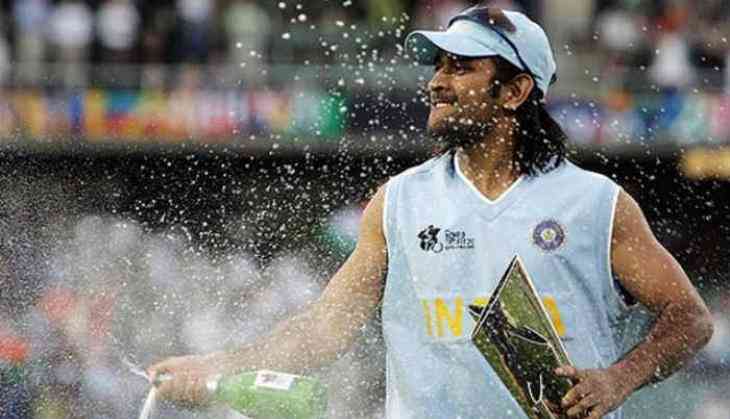
Dhoni Celebrating after India beats Pakistan in the finals of the first edition of ICC World T20 at the Wanderers in Johannesburg
A tournament in which no one rated India to win, especially because the squad was one of the youngest and the most inexperienced amongst all others, it was the Dhoni-led Indian team that emerged winner, in the end, beating Pakistan in one of the most dramatic games the world of cricket has ever seen. It seemed as if India was destined to win the cup. Whatever Dhoni touched turned in gold for India. It looked like India had found its captain for the limited-overs cricket.
Later in 2007, Rahul Dravid had dropped himself as captain of the Indian Team, the selector had started looking ahead for the 2011 World Cup. There was a thought to make Ganguly the captain again, but it would have made the future of the Indian team post 2011 World Cup look dull.
Dhoni was new, he was loved by all after winning the World T20, and was made the captain of the Indian team that had Sachin Tendulkar, Sourav Ganguly and Rahul Dravid in the line-up who mentored Dhoni in every way possible.
Playing By His Rules
By 2008, Dhoni was ambitious for the 2011 World Cup and wanted to build his own team. It was unfortunate to see that Rahul Dravid and Sourav Ganguly did not fit in his vision for the 2011 World Cup. Both the Indian veterans were dropped from the ODI team but continues to play Test cricket. It was a bold decision by Dhoni but it was fruitful and as it turns out, winning the Tri-Series in Australia was one of the biggest achievements in ODI cricket for Dhoni as a captain to that time.
With the retirement of Anil Kumble in 2008, followed by Sourav Ganguly in the same series against Australia at home, Dhoni was now the captain of the Indian Test team as well. India had a great run in Test cricket under Dhoni for a year. Most of the matches were played in home conditions which led to India becoming number one in Test cricket for the first time in history.
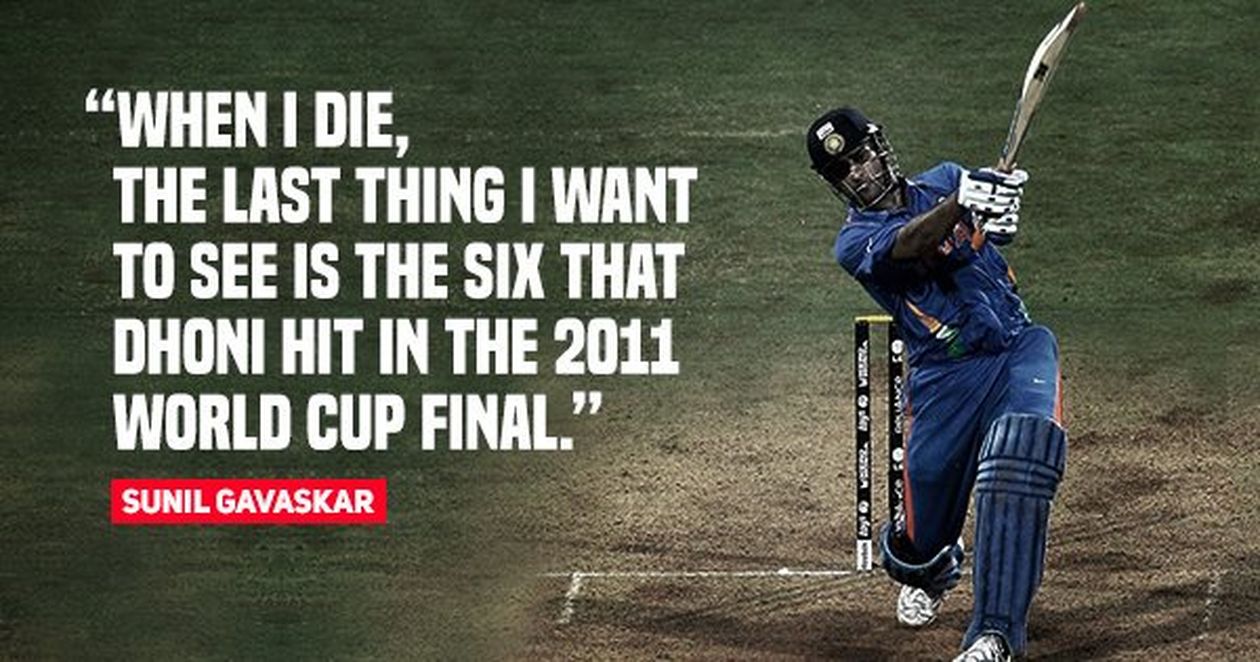
When India hosted the World Cup in 2011, the pressure was extremely high due to high expectations. But no one talked about the fact the no-host nation ever won the world cup before 2011. Expectations were high because the final was to be played at Wankhede Stadium, Sachin Tendulkar’s home ground. The Indian hero was playing his last World Cup. In the end India was able to win the tournament and Dhoni became immortal in the history of World Cups for Indian fans.
Failure in Away Test Series
India was ranked number one for quite some time until they started touring Australia and England. Dhoni’s team lost to Australia by 4-0 in 2011/12 and again by 2-0 in 2014/15 in the away series. They also lost to England in an away series by 4-0 in 2011 and lost to England in the home series 2-1 where the Indian team was troubled by Monty Panesar in 2012-13. However, Dhoni’s men won a Test series in New Zealand 2009 under him.
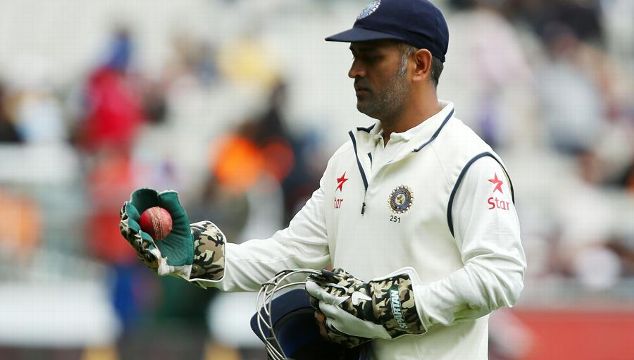
Dhoni’s captaincy in the limited-overs format has been so street-smart that people tend to forget his shortcoming in the longer versions. He is a fabulous wicket-keeper. One of the safest hands behind the stumps and when it comes to stumping, he is lightening. His captaincy sometimes overshadows his wicket-keeping skills and the fact that he has been one of the best finishers in ODI cricket while chasing.
It is sad to see people criticizing this man who gave all he had. Yes, there have been games where we have seen Dhoni not living up to his name but, we as fans do not have any right to tell Dhoni whether he should hang his boots. He is a wise man and he will retire precisely when he wishes to. Kindly let the man make the call himself.
The man behind India’s triumph in the 2011 World Cup has bid adieu to international cricket, bringing an end to a dramatic career. Though it is a sad end for Yuvraj Singh, he should be proud of all of his achievements. Yuvraj’s name will remain forever in the history of cricket.
Early Days
Yuvraj Singh, born in Chandigarh, India, is the son of a former India cricketer, Yograj Singh. Yuvraj loved roller skating and tennis but he focused on cricket because of his father’s association with the sport.
Yuvraj’s career took off when he was selected in the Indian squad for the Under-19 World Cup in 2000. He was named man-of-the-tournament as a Mohammad Kaif-led Indian team emerged as winners. Yuvraj’s performance in the Under-19 World Cup got him a call up to the senior side.
International Breakthrough
Yuvraj, along with several other Indian champions, owes his career to former captain, Sourav Ganguly. Yuvraj’s career, as he acknowledged in his retirement speech, was a result of the belief that Ganguly had in him.
During the early 21st century, Ganguly was looking for young players who could turn out to be matchwinners. Ganguly’s ideology was to show faith in young players regardless of performances, which undoubtedly helped Yuvraj in his fledgling career.
Yuvraj was selected in the Indian squad for the 2000 ICC KnockOut Trophy and made his debut against Kenya in the pre-quarter-finals, although he didn’t bat. However, he bowled four overs and conceded just 16.
In the game against Australia in the quarter-finals, Yuvraj won the man-of-the-match scoring 84 in 80 balls against a bowling attack which comprised of Glenn McGrath, Brett Lee and Jason Gillespie, helping India win by 20 runs.
On the whole, Yuvraj endured a lean first year in international cricket, although a crucial 98 not out in the Coca Cola Cup against Sri Lanka helped his cause. That knock turned out to be futile, though, as his form dropped again, leading to him being replaced in the squad by Hemang Badani.
Later in 2002, Yuvraj made a comeback in the two ODIs against Zimbabwe, scoring 80 off 60 and 75 off 52 in the two games respectively.
The Turning Point
The famous 2002 Natwest Series Final – England vs India- set Yuvraj’s career on fire. Chasing 325, India was off to a flier as skipper Ganguly scored 60 off 43 balls and Virender Sehwag 45 off 49. England had made a comeback with India losing wickets in quick successions, and already smelling defeat, the Indian crowd had started to the leave the field with two young batsmen, Yuvraj and Kaif, fighting a tough battle. Suddenly, the game had started to shift in India’s favour, as Yuvraj and Kaif had started to build a steady partnership.
The duo shared a 121-run partnership for the 6th wicket, which came to an end when Yuvraj was dismissed for 69 off 63 balls as he top-edged a sweep shot resulting in a simple catch to Alex Tudor at short fine-leg.
India went on to win the game with three balls to spare resulting in India’s first win in a final of an ODI tournament since 2000 after nine consecutive defeats.
Solidifying his place
Yuvraj never looked back after this. He scored his maiden ODI century against Bangladesh at Dhaka in 2003, but the innings that defined him as one of the best Indian finishers was the innings he played against Pakistan in the 2003 World Cup. Yes, Sachin Tendulkar’s masterful innings had made it easier for the Indians to seal the game, but chasing 273 back then wasn’t as easy as it may seem now. To be able to handle the pressure of a high-intensity game, build a partnership with Rahul Dravid and finish the game clinically without losing a wicket showed how mature Yuvraj had become.
One for the history books
If there is one thing people would remember Yuvraj for then it would be the six sixes in an over against Stuart Broad in a crucial game in the inaugural edition of the ICC World T20 in South Africa. Not only did Yuvraj hit six back-to-back maximums, but he also went on to score 50 off just 12 balls. It was, and still is, the fastest half-century ever recorded in international cricket in all forms. Yuvraj was in the best form of his life back then and his fearless batting helped India win the trophy under the captaincy of MS Dhoni.
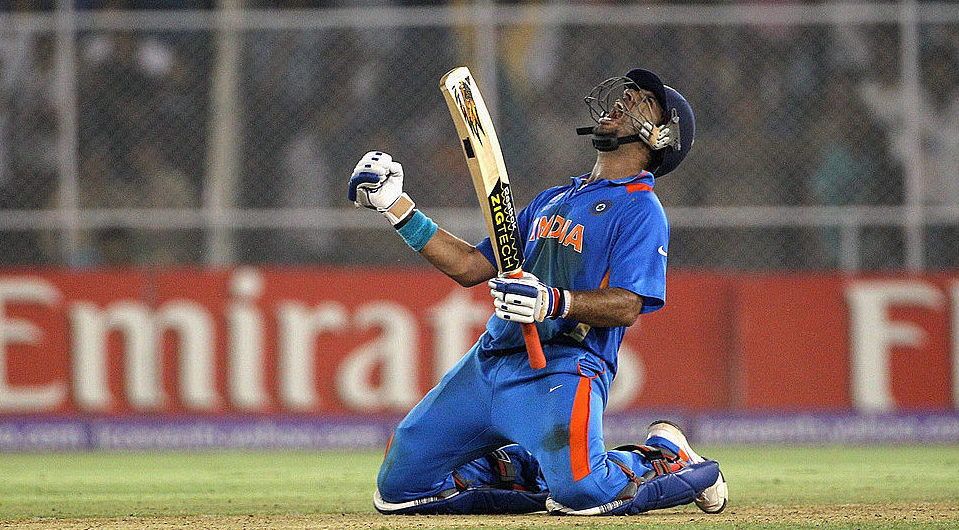
The only medal that was missing from Yuvraj’s trophy cabinet was the ICC ODI World Cup. Yuvraj was having a dream run during 2011, not only with the bat but also with the ball. Yuvraj had proved himself to be a very handy all-rounder and a finisher with the bat. His contribution in the 2011 World Cup winning campaign was paramount, especially in the knockout game against Australia. Yuvraj was named the man-of-the-tournament for his all-around performances.
Turn of Events
During the World Cup, Yuvraj’s body was not fit. Little did he know that he was carrying a cancerous tumor in his left lung throughout the tournament. This is where Yuvraj earns all his respect, not only by being a champion on the field, but by being a fighter off it as well. Yuvraj Singh won this battle as well, a battle bigger than any game of cricket, a battle which can make a World Cup trophy look very small, the battle of life against death. Today, Yuvraj has his own charity foundation to help underprivileged people for cancer treatment. It is called “YouWeCan”.
Tryst with destiny
Yuvraj had a break during his cancer treatment. He did make his comeback into the Indian setup but struggled to make the sort of impact that he had before. No matter how harsh it may seem, Indian cricket had moved on, and fitness had become an issue for our warrior prince, Yuvraj Singh. When age makes its presence known, there is not much one can do. With new talent making their way into the Indian setup, it had become extremely difficult for Yuvraj to make a comeback and hold his position.
Yes, it was a sad end to a great career and some may argue that BCCI should have given Yuvraj a farewell game, but one must remember that life is not kind. Yuvraj Singh’s name will never be forgotten from the history of world cricket for he has been much more than just an entertainer.
There are players whose contributions to the game are quantifiable. We use statistical methods to record their name in the history book. Then there are players whose contributions and efforts can only be known and felt through literature because they are worth much more than numbers. Sourav Ganguly is one such cricketer, whose name is obviously visible in the record books, but whose numbers do not capture the change in mindset that the man brought about when he played for India.
First Stint
A 19-year-old boy from Kolkata, India, Ganguly makes his ODI debut against the mighty West Indies in 1992. Ganguly got out scoring just 3 in 13 balls. He was just a traveler in that Indian squad, not given a chance to bat at the nets. Suddenly, one day he was asked to be ready to bat in that high intensity game against West Indies.
As Sourav wrote in his book, “A Century is not Enough”, he felt as if he was not welcome. He wrote that his teammates in the squad questioned his abilities, treated him as no one and that another player from Delhi was more deserving.
The tour had ended and Ganguly with no hope of playing for India ever again continued playing domestic cricket for Bengal. He knew that playing at the International level was tough and he was not ready, yet.
Lord’s, London – 1996
Four years had gone by and Ganguly was improving his game for Bengal. Due to unavoidable circumstances in the Indian setup, selectors were looking for an extra player for the upcoming Test Series in England. Due to the fact that Ganguly bowled part-time medium pace, he was picked in the India squad that toured England. It was believed that his bowling would help in English conditions.
India had lost the first Test match at Edgbaston by 8 wickets. It was time for captain Azharuddin to make tough calls. The very next game at Lord’s saw the debut of two of the greatest cricketers in who changed the dimensions in which the game was played. Sourav Ganguly was back, confident and focused and along with him, it was Rahul Dravid, a true gentleman, who now gives his time to nurture youngsters in India.
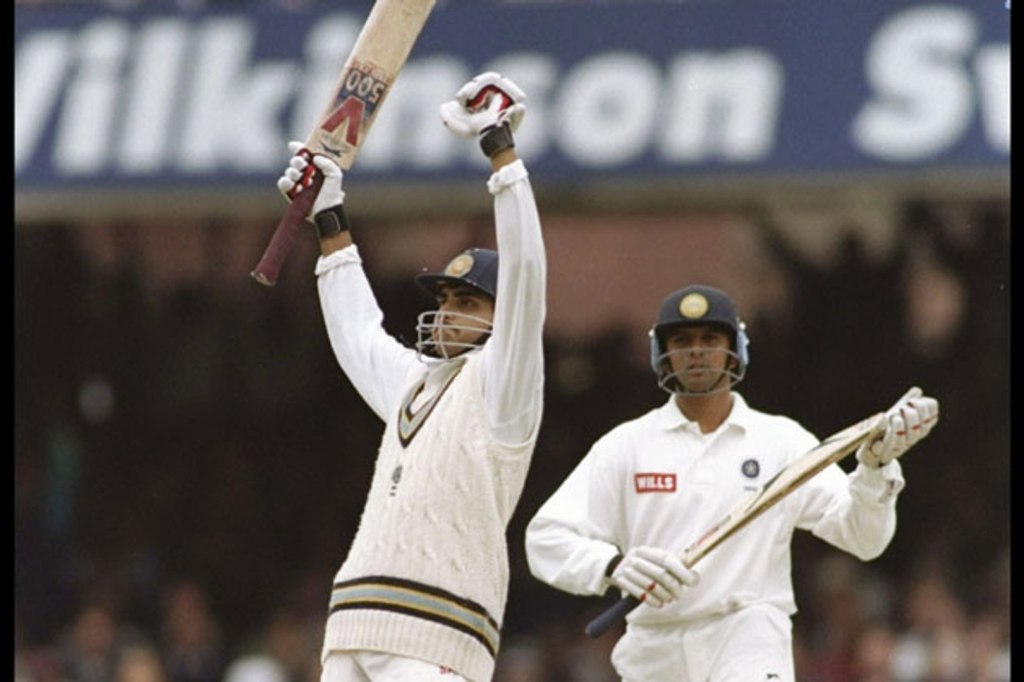
Scoring 131 in the first innings, Ganguly not only announced his entrance into the International stage but answers all his critics who raised a question on his ability 4 years ago. Ganguly went on to score another century in the next match at Trent Bridge and ultimately was chosen as the man of the series for India.
Ganguly after scoring his maiden test century at Lord’s, London in 1996
There was no looking back now. Ganguly proved to be an asset for the team. After Tendulkar, the team heavily relied on Ganguly’s contributions. He was even praised by the Pakistani Legend, Imran Khan during his stint against Pakistan at Toronto, 1997.
A New Dawn
Sourav Ganguly’s biggest contribution to Indian cricket will be to save Indian cricket after the match-fixing scandal that took place during the early 2000s with the late Hansie Cronje and Azharuddin was dropped from the Indian team due to some reports of him being involved.
No night is long enough to not see the dawn. Sachin Tendulkar had already stepped down from captaincy and the onus was on India’s second-best batsmen during the late 90s, Sourav Ganguly. On his first press conference as captain, I remember Sourav mention, “we will play clean cricket”. Indian cricket did not look back ever since. It is time we give Sourav Ganguly the due credit for playing a pivotal role at such a crucial moment in Indian cricket history.
Cricket in India wouldn’t be this successful if it were not because of the fans. Harsha Bhogle had once said that since Ganguly took over as captain, the quality of cricket that India played for the next couple of years brought the fans back, made them pilgrims of the game, believers of the game again. This is the biggest contribution of Sourav Ganguly towards Indian cricket.
Eden Gardens, Calcutta – 2001
The Indian team back then was known to be strong at home but were termed as just visitors when they toured overseas. Sourav’s vision was to change this mentality.
Changes were made to the squad; young players like Yuvraj Singh, Virender Sehwag, Zaheer Khan, and Harbhajan Singh were not only picked but nurtured by the captain. Especially Virender Sehwag, who was a middle-order batsman was promoted to open the innings. As it turns out, he is considered one of the best openers in Test Cricket. The aggressive mindset that they were not going to be bullied and that they were going to play competitive cricket made India look threatening. Anil Kumble had once said to Sourav, “You taught us how to win matches abroad”.
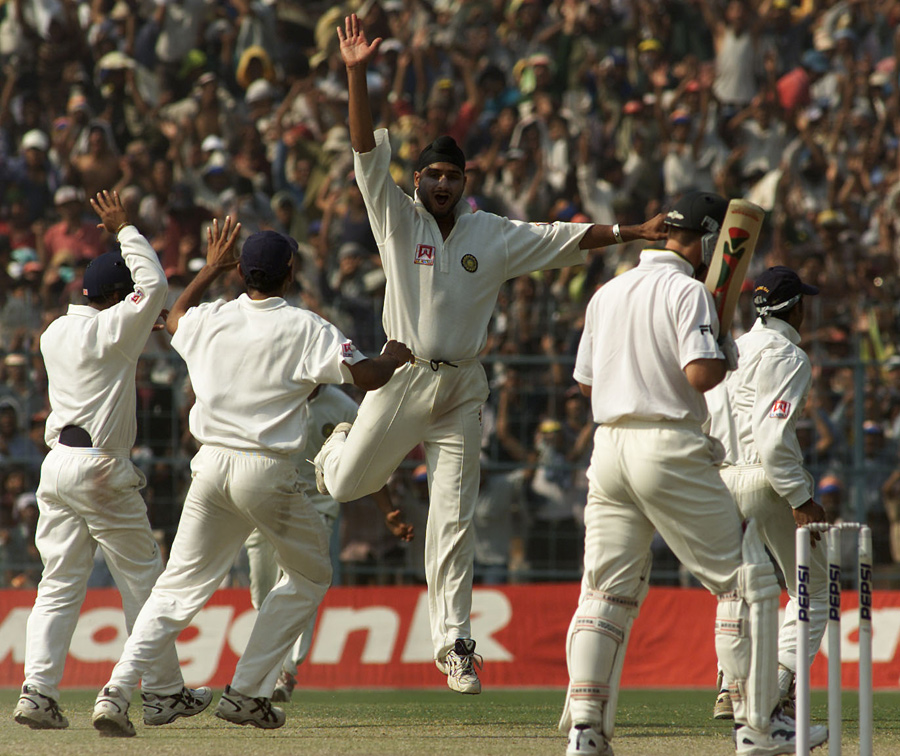
2001 will be remembered as the revolutionary turn-around in Indian cricket history when India defeated Steve Waugh’s Australian Team in a home Test Series 2-1. Before the start of the series, Ganguly fought with the selection committee for the inclusion of Harbhajan Singh into the side who went to become the highest wicket-taker in the series with a hattrick at Eden Gardens.
After losing the first Test in Bombay, they came back strongly, winning in Calcutta at the iconic Eden Gardens. It was a Test which is often referred to as one of the best Test matches in the history of Test cricket. Ganguly and his team finally sealed the series in Chennai. Steve Waugh, the Australian Captain, had termed that series as the final frontier which was later conquered by Australia in the series in 2004 led by Adam Gilchrist.
Scenes from the Iconic Eden Gardens after India beats Australia in what can be called a miraculous win.
Lord’s, London – 2002
Losing the finals in away games was becoming an issue for Ganguly and team. In the tri-series in England between India, England and Sri Lanka, India and England had made it to the finals at Lord’s. England had scored a mammoth 325 and chasing such scores in those days was unheard of. Ganguly and Sehwag were off to a flier. Due to loss of quick wickets, victory seemed difficult but excellence was displayed by Yuvraj Singh and Mohammad Kaif and India ended up creating history in England.
Ganguly was not able to control his emotions and in reply to Andrew Flintoff’s actions in the Wankhede Stadium in Mumbai, Ganguly took off his shirt in the balcony at the Lord’s dressing room and waved with extreme passion.
Indian Captain Sourav Ganguly gives a fitting reply to Flintoff’s stunt
Ganguly’s team did not look back. The aggressive model worked really well for the team and India went on to play finals of the 2003 ICC World Cup. They lost to the best team during that period, Australia.
144 at Gabba, Brisbane – 2003
Ganguly knew that the tour of Australia will not be easy. He took permission from the BCCI Chief and made sure that he prepared for the series in Australia. He requested Greg Chappell to help him with his batting. Ganguly’s preparation reflected in India’s overall performance in that test series down under.
The first test was played at Gabba, Brisbane. The playing condition at Gabba was completely bowling friendly. Ganguly was sledged with the term, ‘sweet chin music’. It was a known fact to all that Ganguly had trouble facing the short-pitched balls. India was in trouble in the first test match with 4 wickets down when Ganguly treated the crowd with a century which was a fitting reply to all the sledging non-sense. The century set the tone of the rest of the series and it got the Steve Waugh led Australian team really focus. The world knew the series was open.
Ganguly enroute to his 144 at Gabba, Brisbane in 2003
The Selectors were not keen on keeping Anil Kumble in the squad. Ganguly put his career at stake in order to get Kumble into the team. The selection meeting went on for quite some time. Selectors finally agreed on having Kumble in the team under a condition that if India doesn’t do well then Ganguly will have to give up his captaincy. In the end, India drew the series 1-1 and retained the Border-Gavaskar Trophy while Anil Kumble was the highest wicket-taker for India.
Rough Patch
India under Ganguly went on to win their first-ever series in Pakistan. A significant mark for the Indian team and the fans. The tenure of the Indian coach, John Wright was coming to an end. Ganguly had a nice time with Greg Chappell back in Australia and he felt like Chappell could be a good addition to the Indian setup. But it wasn’t the case. Ganguly was dropped as captain and dropped from the Indian team due to non-cricketing reasons. It was true that Ganguly’s performance was dropped significantly. But the reason for being dropped was quite clear.
Greg Chappell had his own vision for the team which was not at all in line with Ganguly’s. Playing the villain’s role, Chappell managed to create his own Indian Team and Rahul Dravid was made the captain. India started to falter. Chappell philosophy did not work with the culture in India. Indian players were confused with their roles in the team. A gem of a bowler like Irfan Pathan was ruined by multiple roles that Chappell gave him. Things were not right.
Come Back
Almost a year in exile, Ganguly promised himself, that he will give cricket another try. After days of hard work and determination, Ganguly was recalled in the Indian team that toured South Africa. Ganguly’s score of 51 not out backed up by excellent bowling from Sreesanth helped India register their first-ever Test match win in South Africa. Ganguly ended up being the highest run-getter for India in that series. He was back.
Ganguly fighting his way back into the Indian Team
Sachin Tendulkar once said that the Ganguly of 2006, during his comeback was the best Ganguly he ever saw. Post comeback, Ganguly averaged above 60 in Tests. He was the second-highest run-getter in Test Cricket in 2007.
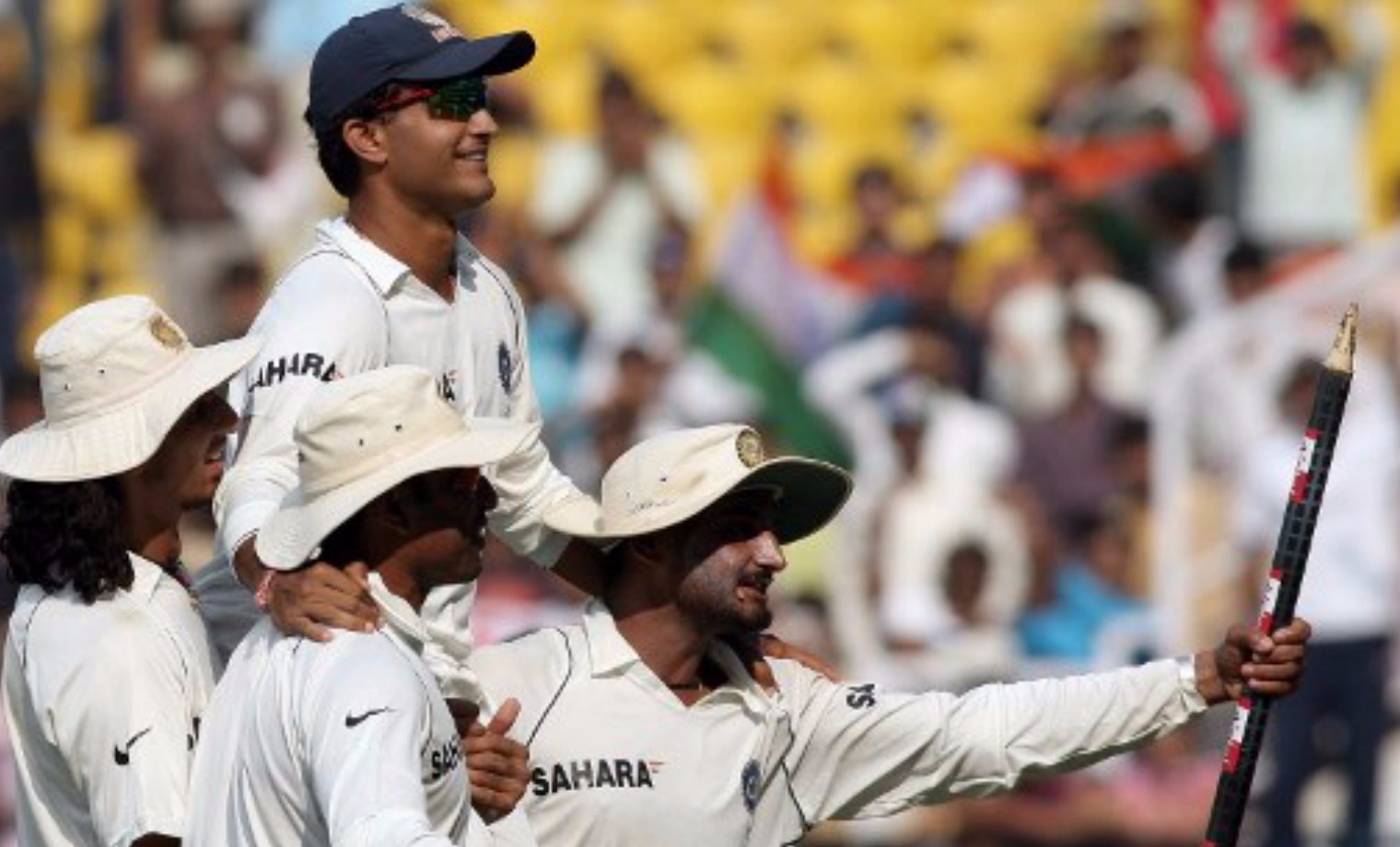
Disappointed with the selection committee, Ganguly decided to hang his boots in 2008 on a high. Scoring a century in his final test series against Australia and a Bradmanesque duck in his final innings.
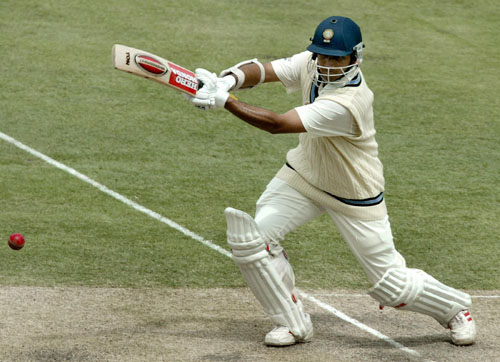
Ganguly playing his trademark square drive in his final Test Match at Nagpur in 2008
What can we learn from him?
There is a lot to learn from Ganguly with respect to leadership, vision, focus and hard work. Ganguly’s leadership model involved giving the youngsters a chance for a longer time period. He wanted his team to feel secure. If you are a manager of a company and you tell your employee to show performance else, they would be fired, your employees would never perform to the potential. It is extremely important that we give the players or any newcomer in any field enough chance and support such that their actual talent starts flourishing.
This is what the CEO of Microsoft, Satya Nadella had to say about him: “The leadership values I learned while playing cricket in India helped me compete vigorously in the face of uncertainty — putting the team first and bringing out the best in everybody. I liked Sourav Ganguly’s style of leadership. Your individual abilities are important, but the ability to bring out the best in others is more important.”
He also taught us to dream big. It’s not just if you can dream it, you will get it but, it’s about being honest about your dreams and working hard to achieve it. There is no substitute for hard work.

 Cow Corner