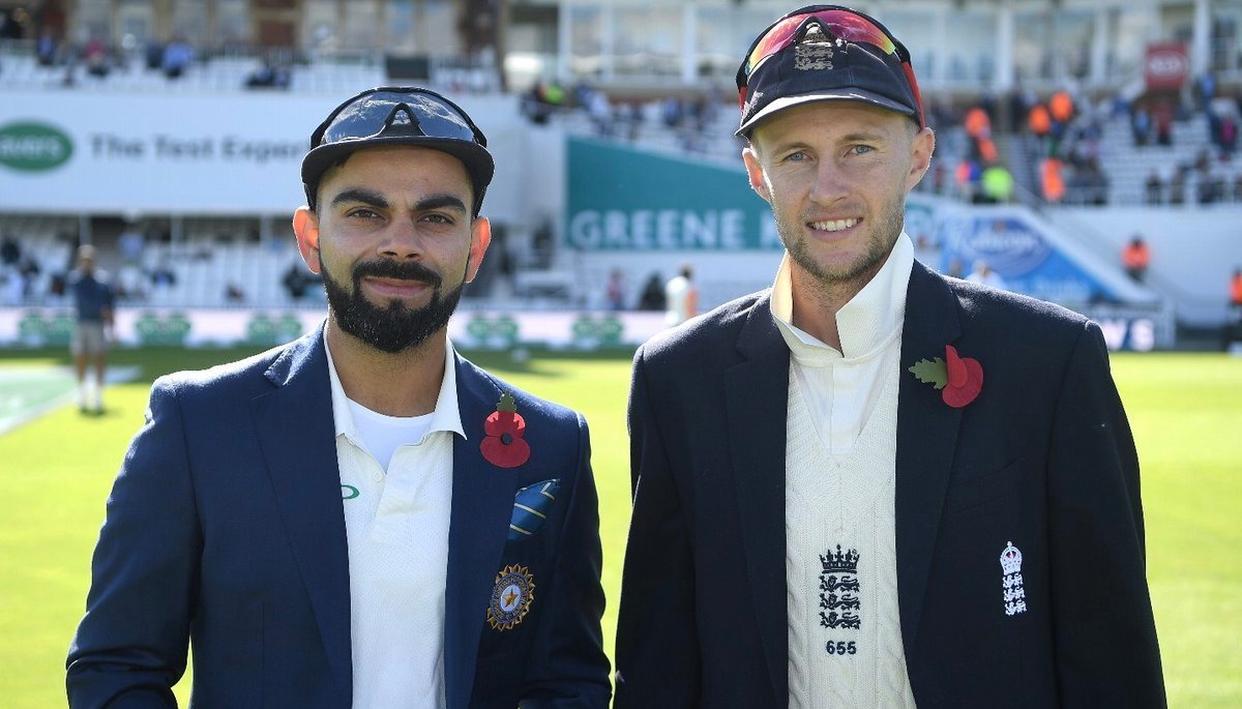
India vs England: Battle of the Best

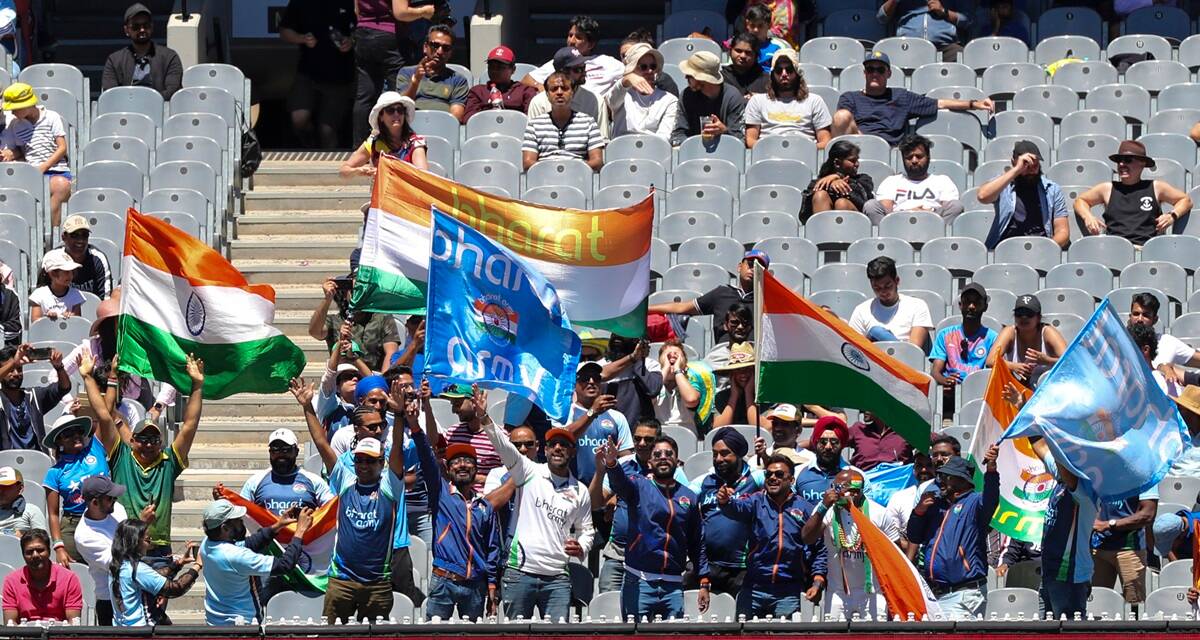
The euphoria of the Gabba test victory seems to be never-ending for the Indian fans. The heroic welcome that the players got upon their home-coming explains what those players have achieved down-under. The present generation is lucky to witness the greatest test series victory, as called by the great Sachin Tendulkar.

However, a fresh challenge beckons for the Indian cricket team as England are coming here, lifted in morale after their emphatic 2-0 test series sweep in Sri Lanka. Sweep is the most appropriate word, signifying how the English batsmen have played the spin bowlers there. 

Joe Root has led the team from the front by scoring back-to-back daddy-hundreds in the two Tests played in Sri Lanka. As far as the English batting is concerned, their captain has been the lone warrior, scoring more than half of the total runs. Most of his boundaries have come off sweep shots, which included some impeccable reverse sweeps too. Remember, Matthew Hayden came up with the same strategy to tackle the Indian spinners and became the highest run-scorer in that test series. Though it was two decades ago, the threat seems to be the same for the current Indian spinners who will not be having Ravindra Jadeja’s services.
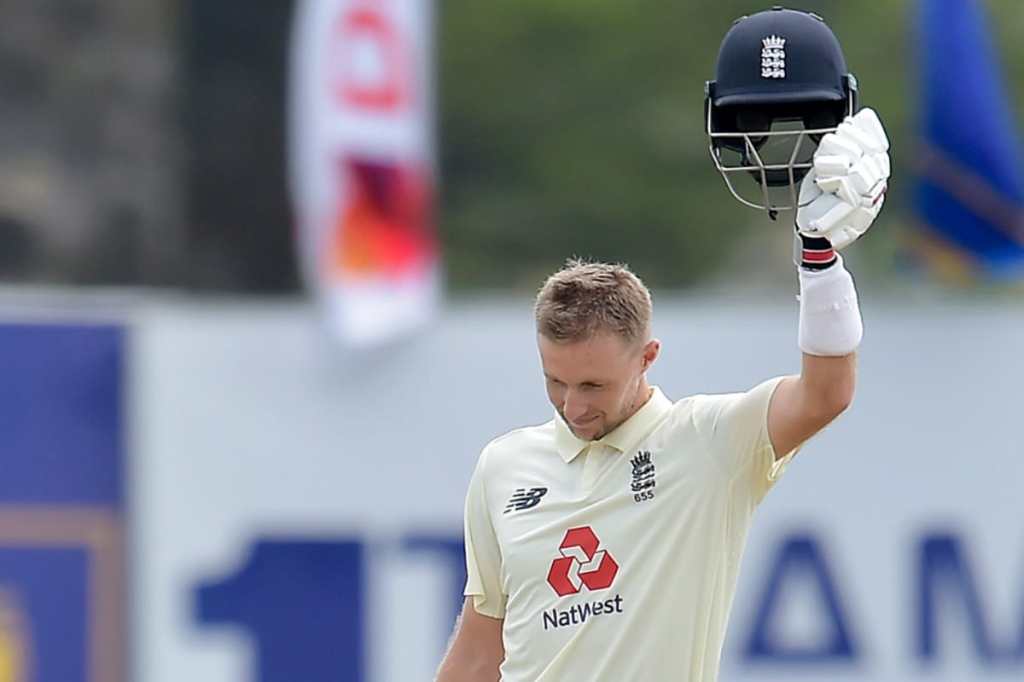
Joe Root is in prime form after his performance in Sri Lanka

Following their captain’s footsteps, youngsters like Dom Sibley and Dan Lawrence scored a solitary half-century to gain some confidence. However, their middle order will be a concern as Johnny Bairstow has been rested for the first two tests, while talks are also that Jos Buttler will be rested for two out of the four tests to be played. That depicts instability in the English batting.

The strategy is fixed for teams playing in the subcontinent- bat once, bat big! The last time England won here, they did bank heavily on Alistair Cook and Kevin Pieterson at first. Their marvellous batting exhibition in Mumbai had lifted the morale of other batsmen. This time, all the spotlight will be on Joe Root and, perhaps, Ben Stokes as well, whose addition to the England squad has added a much-needed weightage to the middle-order.

As much as batting big is required, taking twenty wickets cannot be kept out of mind, because for that England need their spinners to bowl their heart out. Perhaps the way Monty Panesar and Graeme Swann did in 2012 when they spun their way to a historic series victory – their only series win in India since David Gower’s team did it in 1984.

This time too, their squad has a combination of left and right off-break bowlers – Jack Leach and Dom Bess. It has been observed that out of 4 test defeats suffered by India at home in the previous decade, three of them saw contribution by off-spinners – out of which left-arm spinners took almost half of the number of Indian wickets!
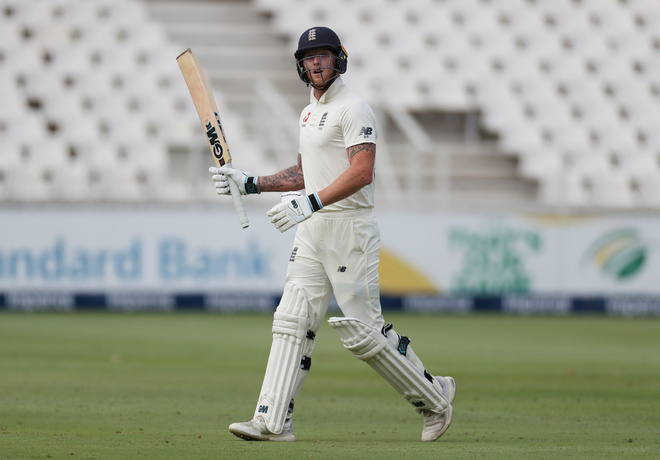
Ben Stokes can be England’s X-Factor

While England team will be bolstered by Ben Stokes and Jofra Archer’s presence, Virat Kohli and Ishant Sharma in the Indian Test squad will boost the host’s morale sky-high. Ishant has performed superbly in the Syed Mushtaq Ali Trophy, while Virat was bound to make a comeback after his paternity leave. India’s opening pair has been strengthened with the onset of a class Shubman Gill, accompanied by the experienced Rohit Sharma. 

It will be challenging for India to choose their XI after how bravely the bench strength performed in Australia. Some of the newcomers will indeed get their slot in the playing eleven, while others will have to make way for the incoming experienced players.

Last time England visited India for a Test series, they were handed a 4-0 drubbing. While the team had almost the same batting line-up, the bowling unit missed a spinner who could do tricks. So it will be all up to the pair of Leach and Bess to turn things around this time.
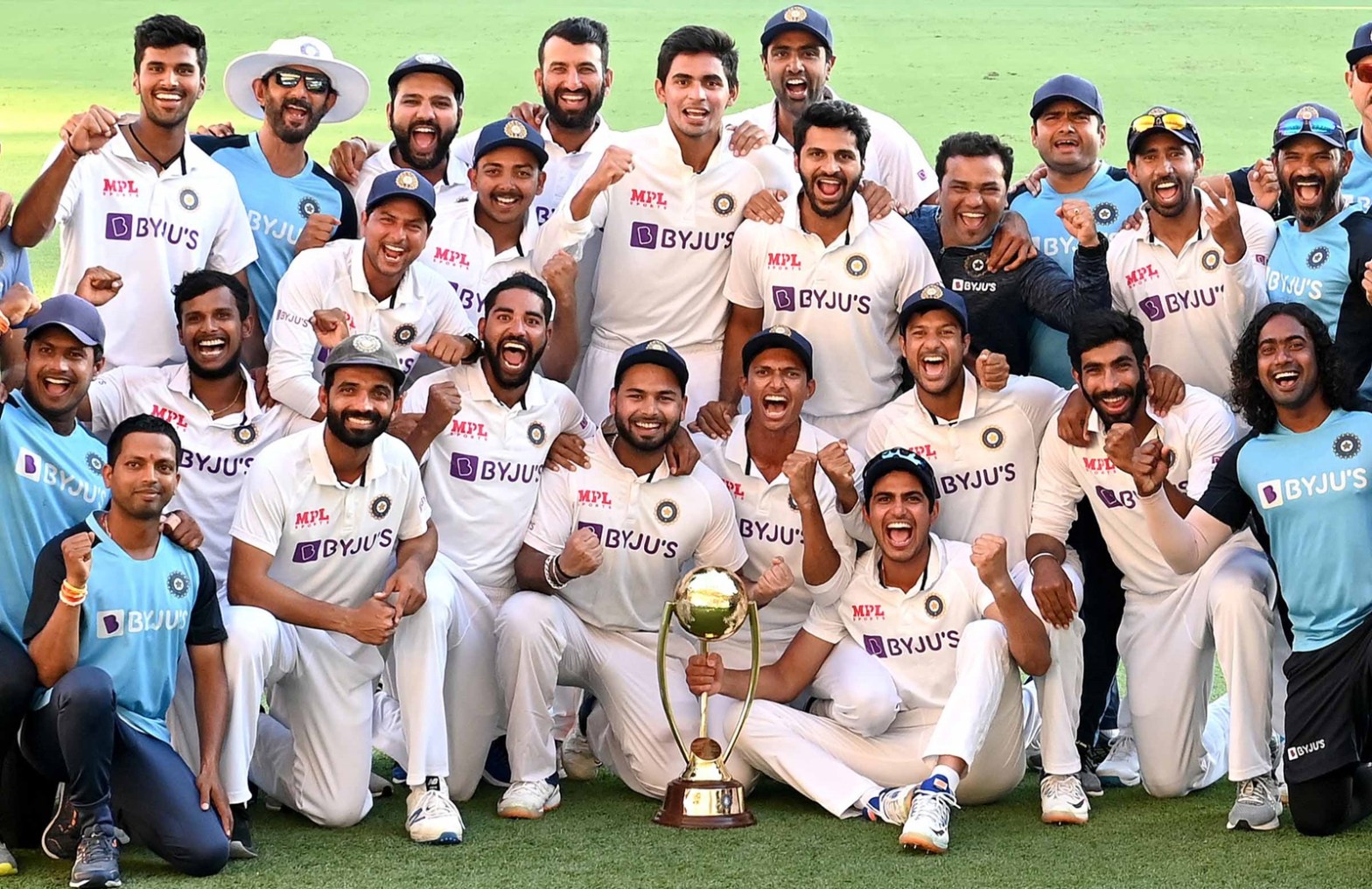
Indian Cricket: Mesmerizing Fans since 1976

The Gabba test had not even started when everyone started predicting a rainfall during the last session of the final day as per the weather forecast. But the rain gods had something else in mind because by the time Rishabh Pant hit the winning runs, the sky was clear, the sun was shining – even the Gods wanted to watch this miracle happen at the Gabba.

India’s miraculous victory reminded the opposition of never underestimating the men in blue, even if the odds stacked against them. History tells us that it has happened many times, and each time India replied the way a cricket team would. It all started from the 1976 test match at the Queen’s Park Oval.

West Indies had underestimated India by setting an improbable target of 406, buoyed by the spinner arsenal they had and the 5th-day pitch, which had started to show its true colors. But the belief in the Indian team, which boasted of players like Sunil Gavaskar, Gundappa Vishwanath, and Brijesh Patel, was there not to save the test match but to win it. And they did chase down the target creating the world record for most runs chased that would remain unbroken for 27 years.

In the final of the 1983 cricket world cup, India was bundled out for just 183 runs. According to critics, it was only a matter of time when the West Indies would chase down these runs and become the champions for the third consecutive time. But captain Kapil Dev’s pep talk in the dressing room during innings break had changed the Indian team completely. They made 183 look like 283 with terrific bowling and fielding performance, and hours later, Kapil Dev had the Prudential World Cup – the cricketing world was once again stunned by the performance of the Indian team.

During 2000-01 Indian cricket was tainted by match-fixing allegations. The team had a new captain in the form of Sourav Ganguly and a new-look team and were challenged by Steve Waugh’s Australia which was on a winning streak of 15 matches. Winning the first test of the three-match series and leading by 274 runs after the 1st innings of the 2nd test, Waugh underestimated India by enforcing a follow on. The Indian team with the help of some attacking innings by VVS Laxman and Rahul Dravid, not only brought the team in a position to save the test match but also raised hopes of an unlikely victory. An Australian collapse during the final session of the test match helped India level the series, from which they went on to win it, stopping the Australian juggernaut.

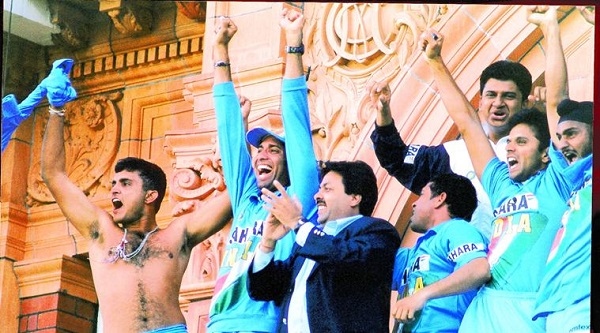
Sourva Ganguly takes off his Tshirt at Lord’s

Indian team showed that the belief to win was always there with them. It did not matter for them when they were 5 wickets down for 152 chasing a huge target of 326, as two newcomers would stitch a historic partnership to chase down the target and make the captain take off his T-shirt to signal that he owns the so-called Mecca of Cricket.

The Indian victory at the Gabba – dubbed as Australia’s fortress – was a phenomenal one, to say the least. The team was already suffering from injuries that forced them to field players who had very little or no experience in test cricket.  The cricketing world did not know the names of Washington Sundar, Shardul Thakur, and T Natarajan when they took the field on the 1st day. But by the end of the 5th day, not only they became heroes in India, people from all around the world were showering praises on the new Indian players. It all happened because they had the belief to win.  They knew that on the cricket field, how one performs on a given day matters the most rather than how much experience one is having.

The entire match had evoked emotions, not only in the younger generation but also in older ones. The reason being that this match had moments in which they could relate to their times as well.

During India’s 1st innings, the match was all but over when India had lost six wickets for only half the runs scored than what Australia had made. But like it happened in 2002 – when newbies Yuvraj Singh and Mohammad Kaif got involved in a historic partnership – here it was the turn of Washington Sundar and Shardul Thakur, batting against the world’s best bowling attack. They made batting look so easy with their immaculate shots, be it the cover drive from Shardul off Mitchell Starc or the no-look shot from Sundar off Nathan Lyon. This partnership made sure that India got closer to Australia’s total and suddenly the game was right back in balance.

Australia then set a target of 326 for India, which was not even close to the most runs chased at Brisbane, and given the 5th-day pitch and Australia’s record, India’s victory was mostly out of sight. There was only one thing people were after – will India be able to save the test?

But this was the Indian team, which had previously chased down enormous looking targets when no-one expected them to. Teams changed over the years, but one thing was common in all those players- the vision to win.

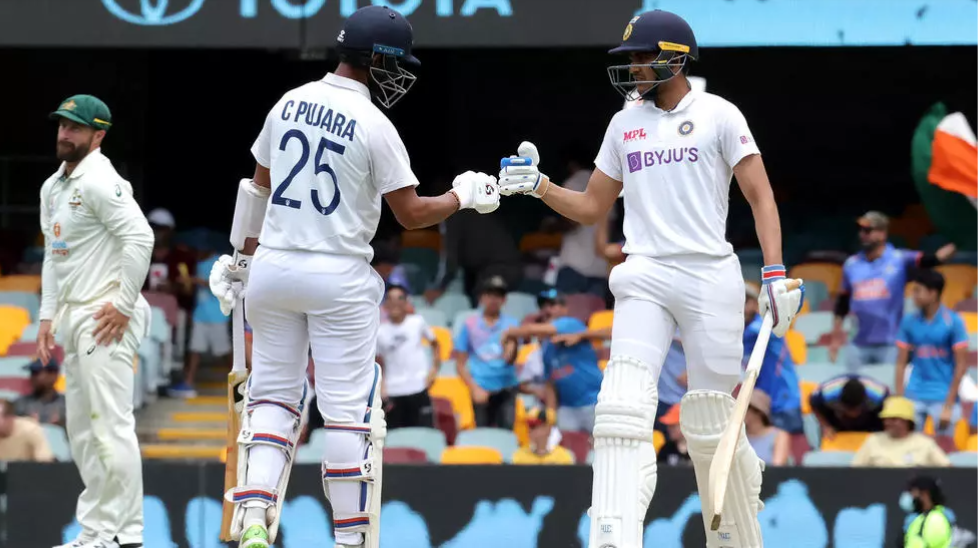
Shubman Gill and Cheteshwar Pujara shared a crucial partnership in the run-chase at Gabba

The chase started well with Shubman Gill, who played an innings filled with classic strokes, scoring runs all over the ground. The youngster had the license to play those shots as Cheteshwar Pujara had held up one end and put a heavy price on his wicket by taking blows after blows on his body. After Gill was dismissed, Captain Ajinkya Rahane made sure that the scoreboard kept ticking. He was out there to play his strokes, giving a clear signal that India is aiming for the target. Rishabh Pant then played an innings which will be etched in cricketing folklore for years to come. He immortalized himself at the historic Gabba with a historic knock of 82 runs, and with the helping hands of Washington Sundar, the runs were chased down in the final moments of the test match.

Unforgettable contributions were also made by the bowlers Mohammad Siraj, Shardul Thakur, and T Natarajan, who played their parts and picked important wickets. Navdeep Saini unfortunately, injured his groin early on in the 1st innings. However, that injury did not keep him out of the entire match, as he came back in the 2nd innings to bowl a few overs, and also during the chase, he had his pads on. That shows what these players are made of.

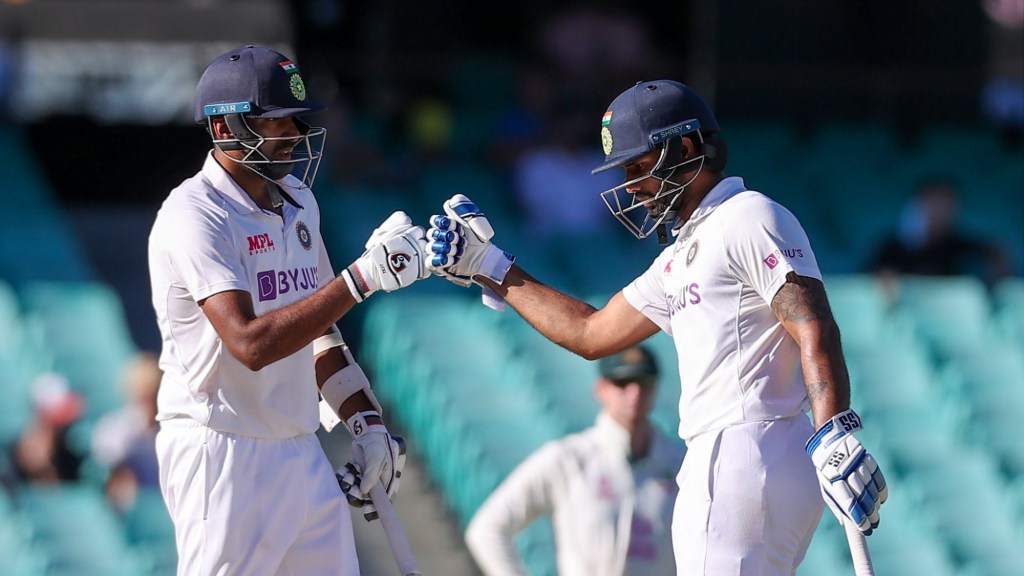
It highlighted the same determination which was showed by Hanuma Vihari and Ravi Ashwin at the Sydney test because of which the series was alive. Both were battered and bruised, but they stayed on the pitch and never bowed down to the Aussie bowlers. In some way, it also evoked the same emotions from the cricket fans that they must have got when Anil Kumble took Brian Lara’s wicket with a broken jaw.

Someone said it correctly that the recently concluded test series deserves a documentary. It had all the elements – teamwork, courage, determination, and the belief to defeat all the odds.

India’s quest to conquer the Gabbatoir

If there is a term that would describe the Indian cricket team after they salvaged a draw at the Sydney cricket ground – “Cornered Tigers” seems to be the most suited one. Against the backdrop of the racism chants by some irresponsible Australian fans, the Indian team sent a strong message to the cricketing world; if they are abused on the field, they will come back only stronger.

During the starting hours of the final day, after the dismissal of captain Ajinkya Rahane, an Australian victory was just a matter of time. However, wicketkeeper Rishabh Pant had some other plans for them. His attacking instinct, that too against ace spinner Nathan Lyon, only reaffirmed that India was going for the target of 407 rather than playing for a draw.

With Cheteshwar Pujara holding one end and Pant continuing to play in his attacking best, India was on course for an unlikely victory. Unfortunately, all hopes were shattered, the moment Pant was dismissed three runs short of what would have been one of the great centuries in Australia. It was followed by Josh Hazlewood, breaching the defense of Pujara, and suddenly an Indian defeat was on the cards. Test cricket was at its best as fortunes swung from one side to another.

Vihari-Ashwin’s vigil at Sydney will be talked about for years to come

Situations started to worsen for India as Hanuma Vihari picked up a hamstring injury, but that did nothing to undermine his resolve as he kept defending and put a high price on his wicket. He was also helped tremendously by Ravichandran Ashwin, who was keeping most of the strikes. The southpaw also had to face a barrage of short balls, being struck on the ribs and shoulder, following which the Indian team’s physio became a consistent attendant on the field.

Australia needed just one good delivery as, after that, one batsman with an injured thumb and three tailenders remained in the Indian batting line-up. But unfortunately for Australia, that delivery never came, thanks to the gritty innings played by the pair of Vihari and Ashwin – not to forget three dropped catches by Aussie captain Tim Paine. It will not be wrong to say that India did gain a psychological victory in the Sydney Test.

India didn’t play a full-strength team; otherwise, the way Australians were on the back foot even against a B team of India, the result could have been different.

Going into the final test at Gabba, various injury questions have to be answered by the Indian team management. With the absence of Ravindra Jadeja, India will miss both an all-rounder and a great fielder. As the injury clouds hover over Jasprit Bumrah with reports of an abdominal strain, Hanuma Vihari has also been gone for scans for his hamstring.

Openers would like to make it count at the Gabba

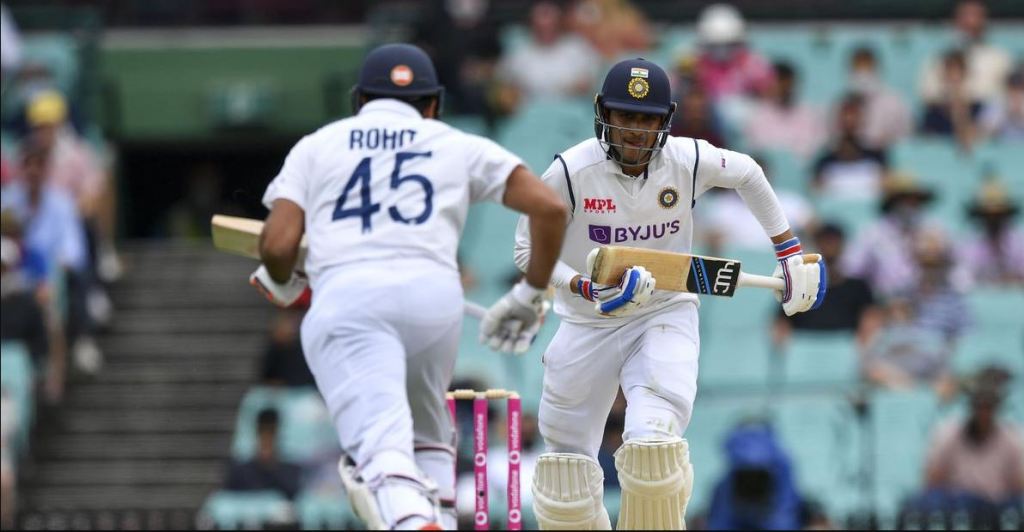
The batting looks more or less well equipped with the openers – Rohit Sharma and Shubman Gill – both missing out on big scores in the 3rd test would look to make up for it in Brisbane. Pujara and Rahane need to show their experience in the middle order. Wriddhiman Saha can be roped in as a wicketkeeper while also having Rishabh Pant as a pure batsman. It will not only strengthen the batting but will also give an edge over Australia in wicket-keeping skills.

Ravichandran Ashwin does not look fit, but with his morale high, it is evident that he will play at the Gabba and try to revive his magic with the ball which seemed missing in Sydney.

The main concern for India will be their pace bowling department. All the pace bowlers, who were in the starting line-up of the 1st test, will be missing the final one – with Jasprit Bumrah being the latest addition to the injury list comprising of Mohammad Shami and Umesh Yadav. It will be interesting to see who will assist Mohammad Siraj and Navdeep Saini in bowling. Whoever it will be, this bowling attack for India will be the most inexperienced for them in overseas test matches in recent times.

Despite all these, the way the Indian team has displayed their determination on the field gives the impression that any player can prove to be menacing for Australia once he dons the Indian jersey.

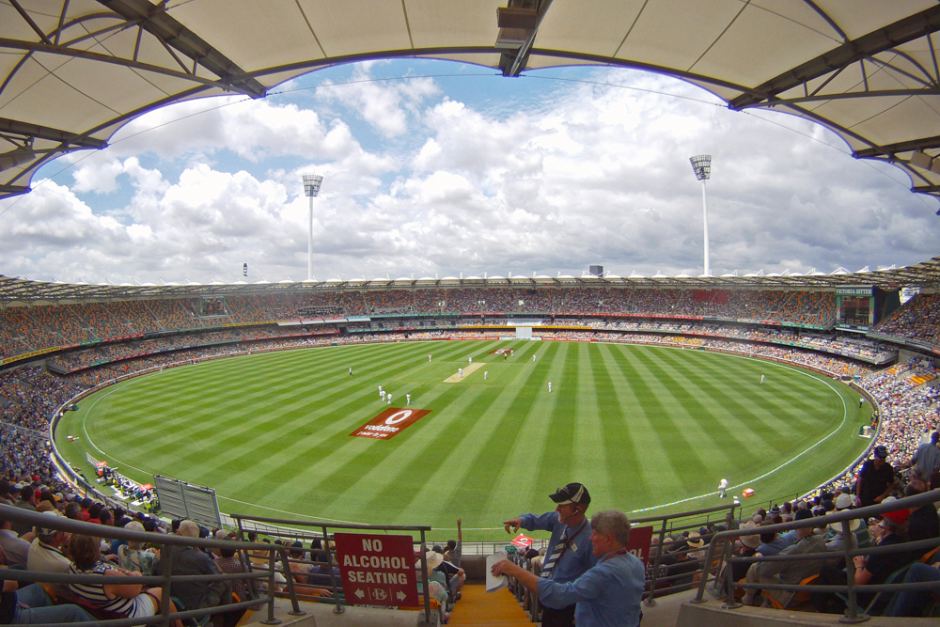
With the Indian team’s morale high, it won’t matter to them that Gabba has been a fortress for Australia where they have been undefeated for 33 years – the mighty West Indies being the last team to defeat the hosts. What the visitors would be looking for is nothing short of a victory, breaching the impregnable Gabbatoir!

India’s running conundrum

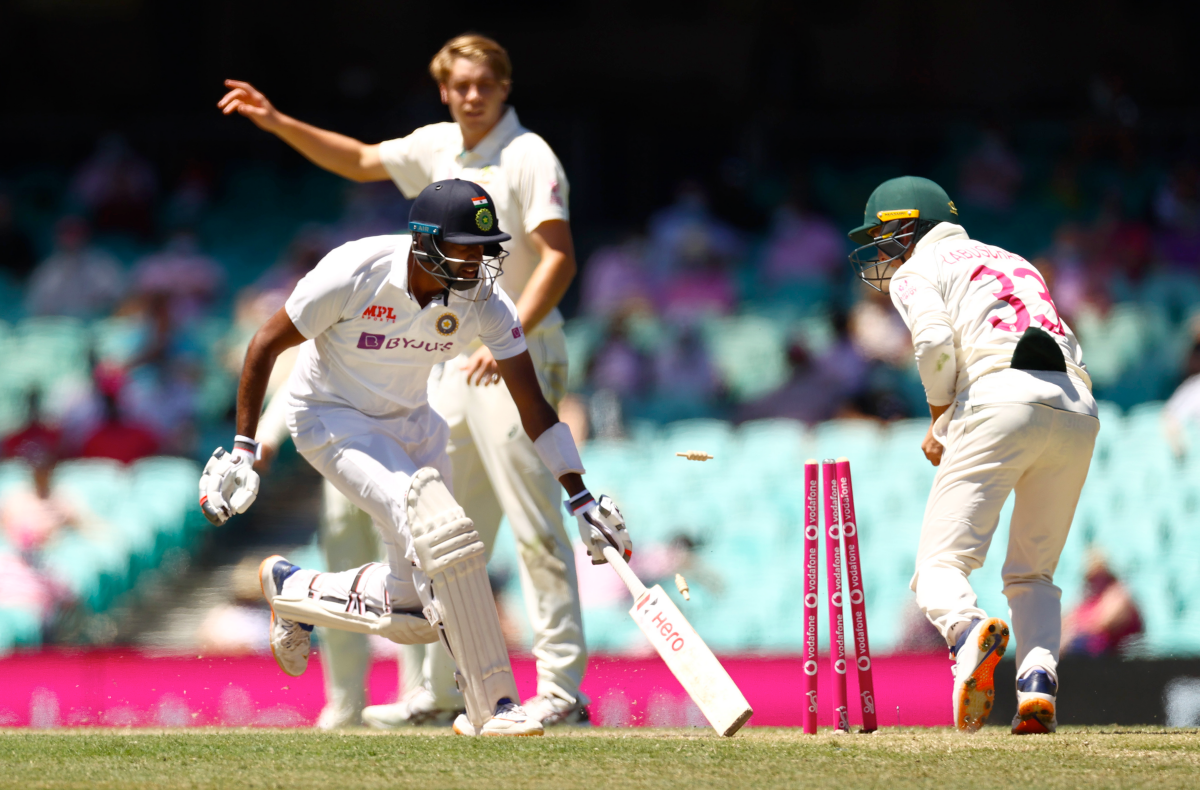
The run-out dismissals of 3 Indian batsmen in Sydney Cricket Ground raised several eye-brows in the cricketing world. It becomes a talking point when it is known that the last time this many run-outs, in Indian innings, occurred some 12 years back, against England in Mohali.

Over the past decade, the Indian team has undergone a tremendous change. Players like MS Dhoni, Virat Kohli, Suresh Raina, and Ravindra Jadeja brought a new dimension to running and fielding. Suddenly the Indian team began to be recognized among the best fielding sides in the world.

Critics started to talk more about the fascinating manner in which the Indian batsman stole runs from fielders. The game had changed as what looked like one run was now two. The batsmen laid more emphasis on taking those crucial quick singles which led to the scoreboard ticking – even good bowlers started to come under pressure.

However, cricket is a cruel sport!

If we turn the clock back, then there are two matches coming to my mind, both involving India and the West Indies, one of them was their contest in the 2014 T20 world cup, before which Raina had commented about the fitness of West Indies players and called them “bad runners“. It was well established when Chris Gayle was run-out in that match.

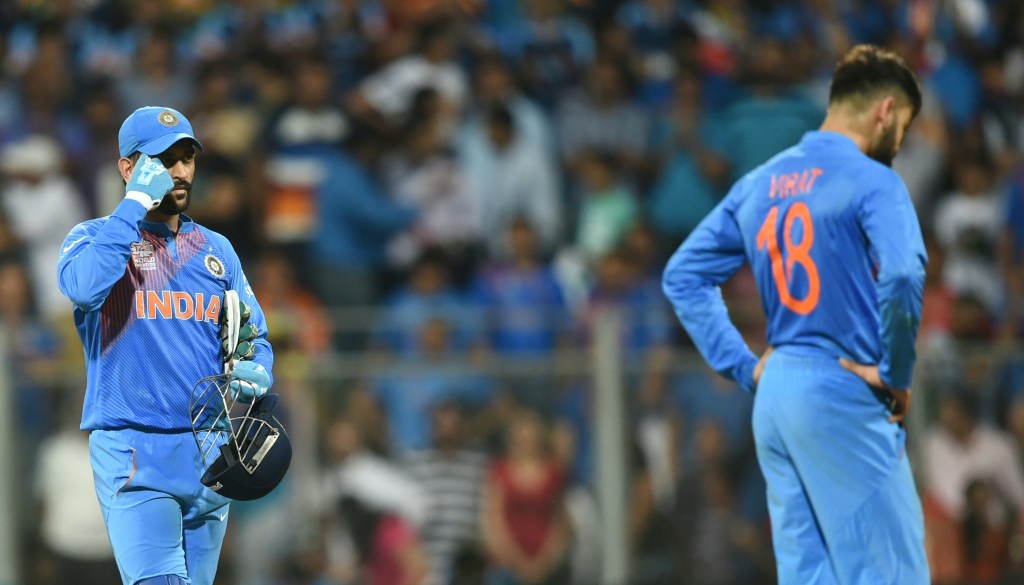
Indian players dejected after losing to West Indies in the semi-final of 2016 T20 World Cup. Photo Credit ( AFP / INDRANIL MUKHERJEE)

In the next edition of the world cup, the same teams met, this time for the semi-final. The hosts, India, batted first, and buoyed by their fitness abilities, the batsmen ran their hearts out. They looked like in the scheme of things, while the West Indian fielders looked tired. It seemed as if India dominated their batting innings. However, after the completion of allotted overs, the first inning score – of 192 – was suddenly looking to be chasable on a Wankhede pitch helped by the dew factor. India had scored just 48% runs in boundaries. West Indies banked on its strengths by relying more on hitting boundaries rather than running. The Carribeans cruised to victory by scoring a whopping 76% of its runs in fours and sixes.

The over-reliance on running between the wickets cost India the game – and also the world cup!

Now coming to the Sydney encounter, India’s run-out dismissals has raised several questions. On a pitch, where suddenly any delivery could become a wicket-taking ball and a set batsman could be dismissed, getting run-out is the last thing a batsman wants. Two of the run-outs occurred when Ravindra Jadeja was at the crease. The all-rounder has now been involved in a staggering 20 run-outs, out of which 13 times his partner had to walk back to the pavilion.

Jadeja, who had taken the cricketing world by storm after inflicting a direct hit to end Steven Smith’s knock just a day earlier, questions started to get raised on whether he had misjudged his partner’s running speed.

Ravi Ashwin was one of the two batsmen dismissed in an attempt to take a single. Jadeja should have known that Ashwin’s fitness capabilities are nowhere as compared to that of his. But frankly speaking, the culprit was Ashwin, whose fitness has been a talking point even on the field. This kind of dismissal not only robs the team of useful runs but also gives the bowling team much-needed motivation when nothing is working for them.

To put things in place, India should not become complacent by having just a few players with superior fitness in the team, or else it can lead to a catastrophe.

The Pink Test: Players under the Spotlight

After registering a remarkable comeback in the Boxing Day test match at Melbourne, India will look forward to keeping the momentum going in the upcoming New Year’s Test at Sydney.

Traditionally, we have seen a pile of runs scored at SCG, making the test more exciting as the probability for a full 5-day cricket gets raised to a greater extent. We saw India scoring over 600 runs in the first innings the last time they played here, making sure that the Border Gavaskar Trophy was won by the men in blue – for the first time on Australian soil.

Coming into this test match, some players are under the spotlight, including those expected to play their first match of the test series.

Cheteshwar Pujara

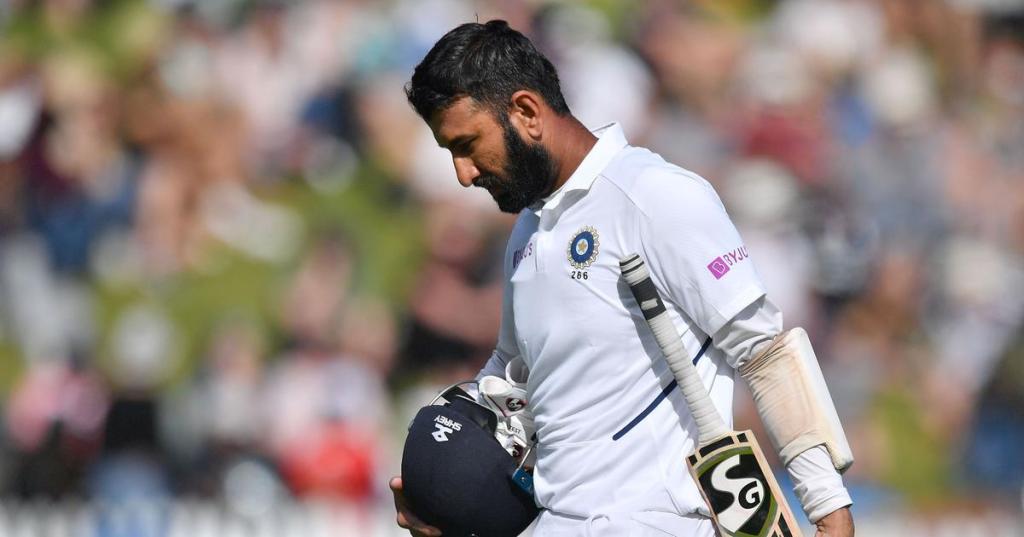
Cheteshwar Pujara has not performed up to his standards (Photo: AFP)

Indian fans are relieved that the Indian bowlers, particularly Ravichandran Ashwin, have been able to neutralize Steven Smith. But even Pujara, who is expected to play big innings, is having a woeful run in this series. In the overseas tours of West Indies and New Zealand, Pujara has a solitary fifty in 12 innings. That makes for rather a serious introspection.

The no.3 batsman was the chief architect for India behind their historic series win in Australia during the 2018/19 series. Since then, apart from a couple of home series, Pujara has been unable to convert the starts into big ones. 

He is known for using his soft hands because of which even if edges were induced, it did not carry to the slip fielders. But suddenly, those edges are getting carried, probably because there has been a lot more tentativeness in his stroke play.

With the Pink Test to come, a big inning is expected from him which could put India in the driver’s seat.

Rohit Sharma

Rohit Sharma’s performance as opener will be something people will have eyes on (Photo Credit: AP)

If there is any batsman after VVS Laxman, who has been lethal against Australia then it is Rohit Sharma. 

He started his test career batting down the order, but in the 2019 home season which saw Bangladesh and South Africa in action, the Mumbai Indians captain was given the opener’s slot. It suited him well as he rose to the expectations by reaching the triple figures thrice, including a double hundred.

Since then, injuries saw him out of the New Zealand tour, and another towards the end of IPL made him sit out of the limited-overs series and a couple of test matches in Australia. He is all set to make a comeback to Test cricket after a year or so, and with the backdrop of news surrounding the bio-bubble breach, the spotlight is on him to perform and silence the critics.

The 3rd Indian Pacer

T Natarajan (left), Shardul Thakur (Centre), Navdeep Saini (Right)

With a calf injury ruling Umesh Yadav out of the ongoing series, the management must pick one of the young trio comprising Navdeep Saini, Shardul Thakur, and T Natarajan. It is a difficult choice because all three can make something happen with the ball. 

While Thakur can swing the ball, Saini is more of a hit the deck bowler. With the Brisbane Test to follow, we may see Saini making the playing XI. The variation provided by the left-arm angle of T Natarajan also cannot be ignored.

The Pink Test at the SCG can be very decisive in the context of the Border-Gavaskar series. If India can get a win, then they have both hands on the coveted trophy. And in case the hosts go 2-1 up, India has to create history at the bouncy Gabba where they have never registered a victory in test matches.

Boxing Day Test 2020: The defining moments

The winning runs scored by Indian captain Ajinkya Rahane nicely summed up the entire test match. It was appropriate for Rahane to hit those runs as the boxing day test was perfect for him both as a captain and as a batsman. The winning runs also came off a misfield at backward square leg, hinting at how miserable the Kangaroos were on the field.

We now look into those crucial moments which showed how India won the test match and how Australia lost.

Bumrah the Go-To bowler

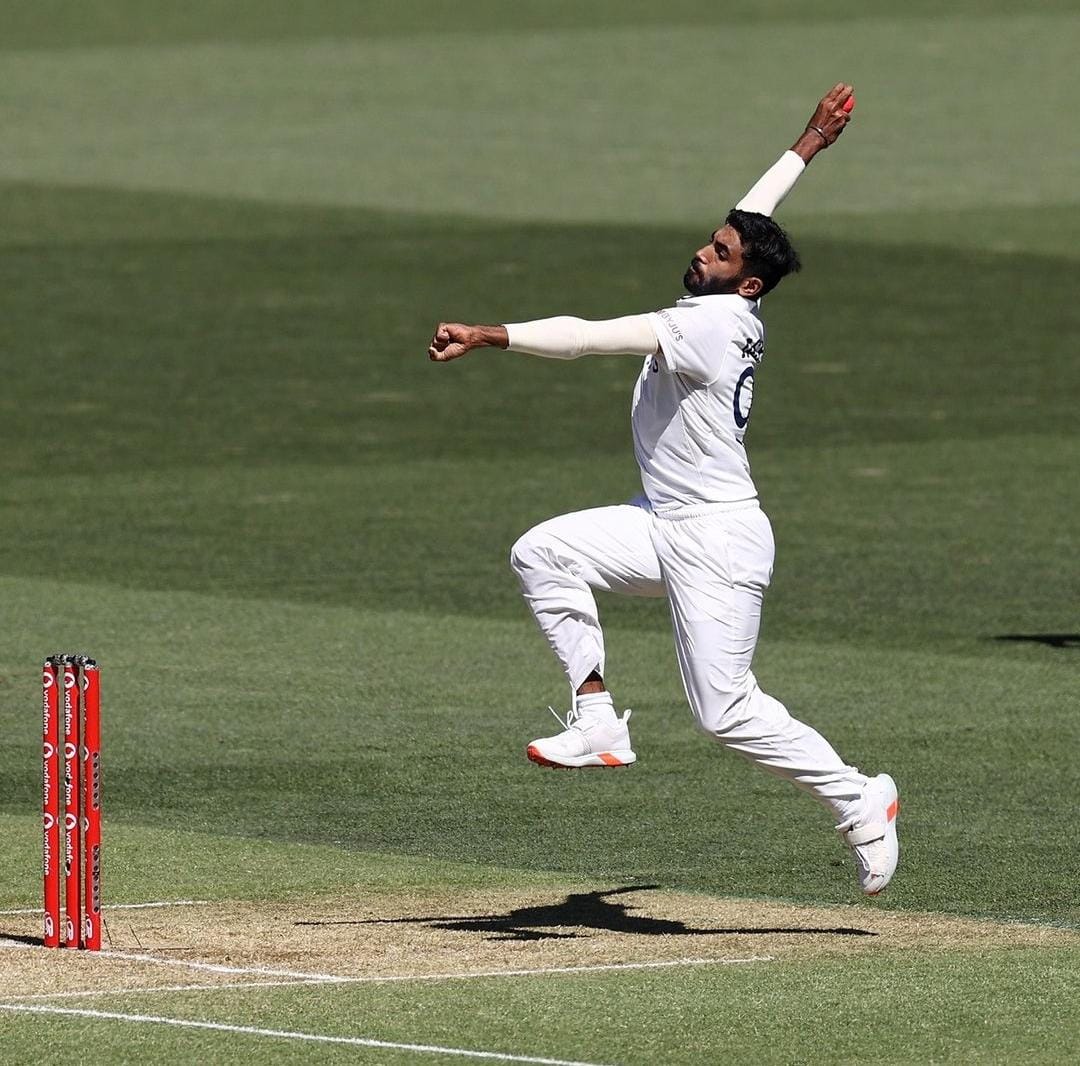
Jasprit Bumrah took wickets at crucial moments (Image credit: BCCI Twitter)

It was important for India to make an early breakthrough after embarrassingly losing the 1st test, one bowler injured, losing the toss in the 2nd game to allow Australia bat on a new pitch. Jasprit Bumrah was the man in action for India as he again got the better of Joe Burns whose lean form still is a cause of concern for the hosts.

Travis Head and Marnus Labuschagne started rebuilding the innings with 86 runs partnership for 3rd wicket. The partnership was broken by none other than Bumrah in his 2nd over after the drinks break. There was no stopping India after that as wickets fell in regular intervals with Mohammad Siraj and Ravindra Jadeja too pitching in with crucial wickets to their name.

During Australia’s 2nd innings, no partnership went beyond 40 runs until for the 7th wicket between Pat Cummins and Cameron Green for which they stitched a crucial 57 run stand. Who else but Bumrah was there to give India the much-needed breakthrough, this time with the new ball.

Rahane’s masterstrokes

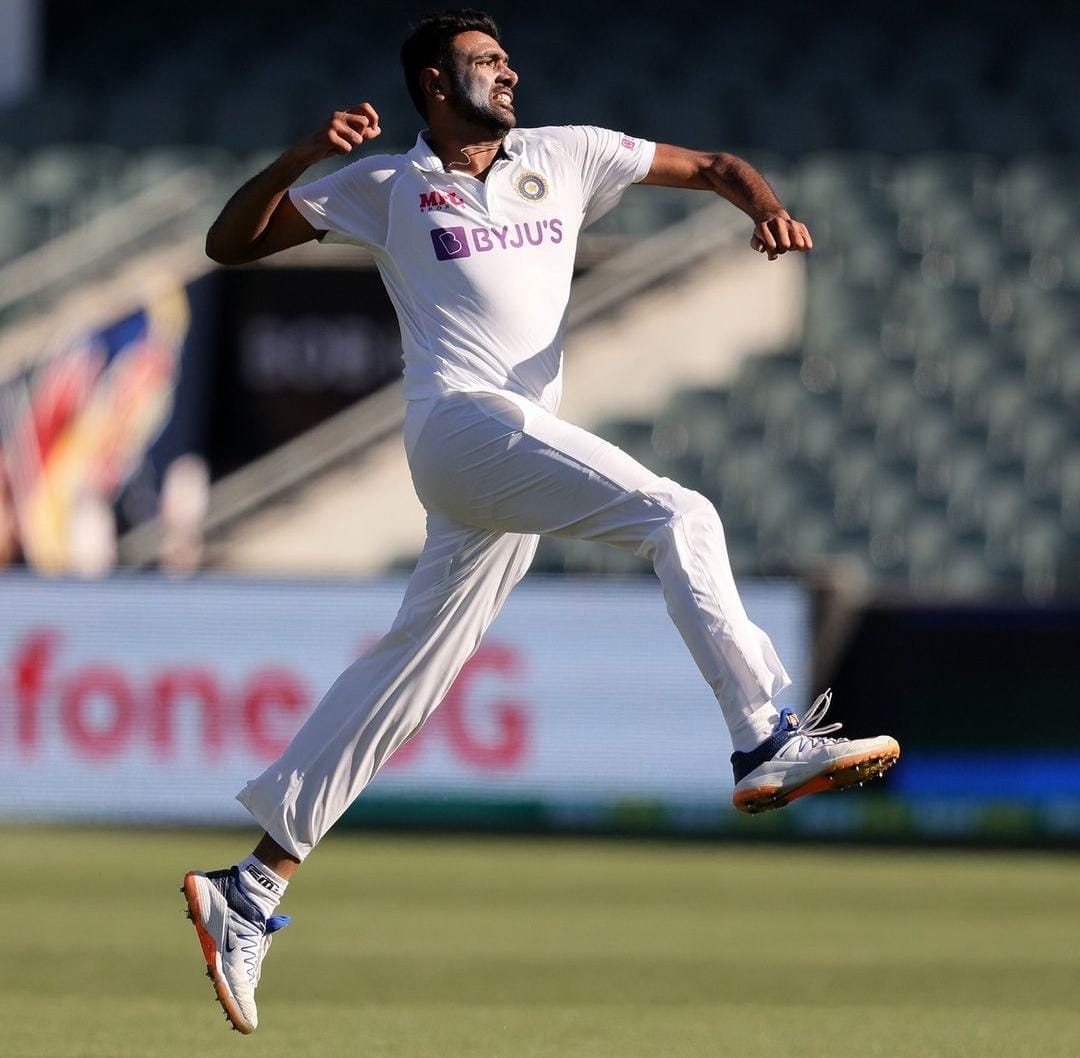
Ravichandran Ashwin continuing his great form with the ball (Image credit: AP)

After Bumrah’s spell, rather than bringing newbie Mohammad Siraj, Rahane brought Ravichandran Ashwin into the attack who was having tremendous confidence coming into this match. Just in his 2nd over, Matthew Wade came down the track to play a mighty shot but got a top edge and Ravindra Jadeja made no mistake.

This brain faded shot from Wade had brought Steven Smith to the crease with Ashwin bowling, and Rahane was ready with the slip trap for the ace batsman. This time it was the leg slip who grabbed a nice catch to dismiss Smith scoring a duck for the first time against India.

Shubman Gill’s strokeplay

Shubman Gill played attacking shots right through his innings (Image credit: AP)

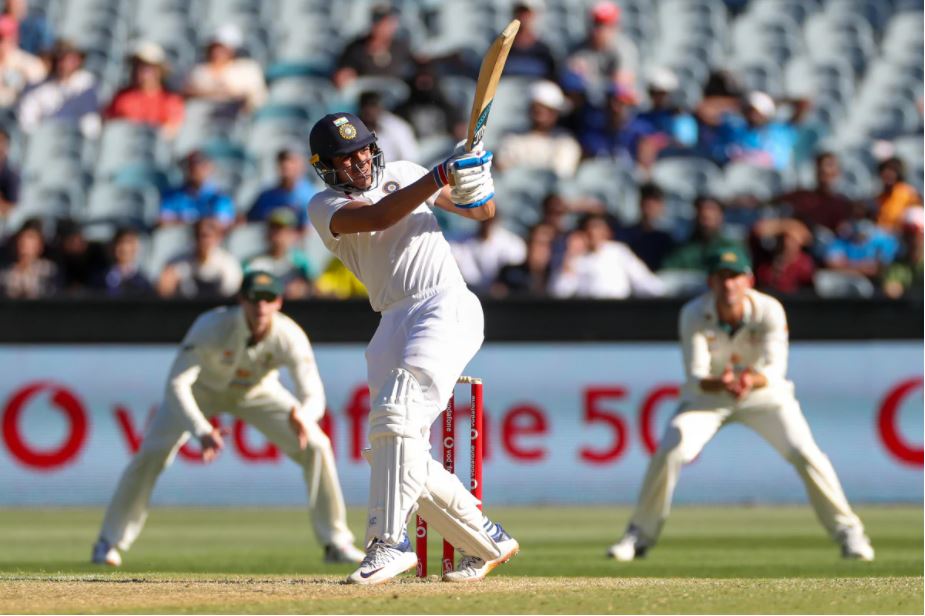
The Adelaide debacle was still afresh when Mayank Aggarwal was dismissed in the very first over. It was Shubman Gill who took the attack to the Aussies by scoring a couple of boundaries each against Pat Cummins and Mitchell Starc in successive overs. While one was a fuller delivery driven past mid-off, another was a short delivery from Starc and the young batsman did not hesitate to punch it on the offside. Gill sent a very strong message to Australia when he skipped down the track against Nathan Lyon who was bowling the penultimate over of the day and scored a boundary.

As the players walked off after the end of 1st day’s play, the Indian batting was looking in a different shape altogether, thanks to Shubman Gill who already had 5 boundaries to his name.

Captain’s knock

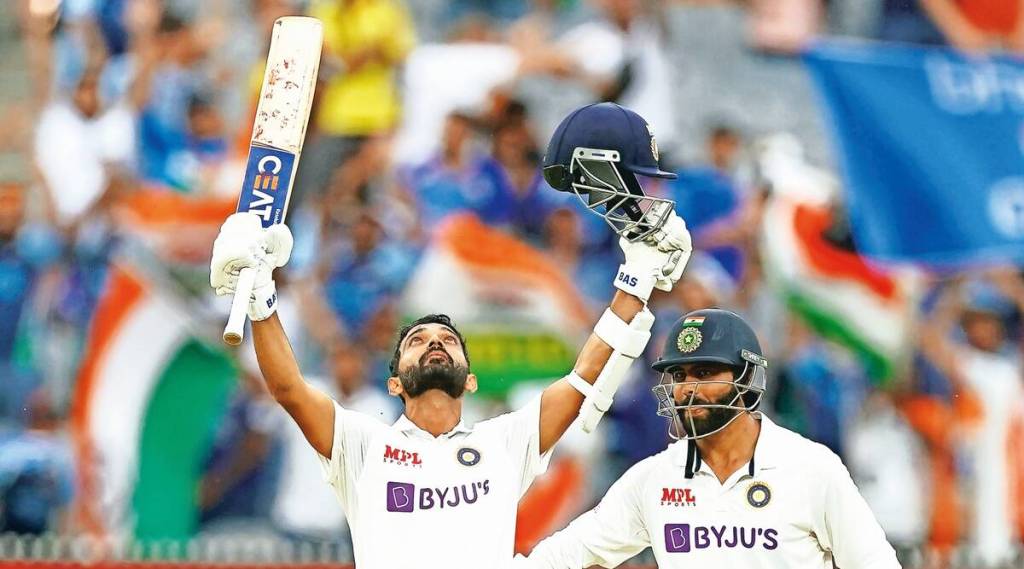
Ajinkya Rahane savors his century at MCG (Image credit: Reuters)

Ajinkya Rahane’s innings was nothing short of amazing. His innings came at a time when Gill and Pujara, whose lean run continues, were dismissed by Pat Cummins in successive overs. With Hanuma Vihari at the crease and trailing by 131 runs, it was never going to be easy.

After a steady half-century run partnership, Vihari was dismissed by Nathan Lyon. Rishabh Pant then scored 3 boundaries in which two came against Cummins. This transferred the momentum back to India but he could not last long as he gifted the 250th wicket to Starc.

Rahane then changed gears when Jadeja arrived and made sure India scored at 3 runs per over. They had stitched a 104 runs unbeaten partnership by the end of 2nd day’s play, in which the captain had 8 boundaries to his name compared to Jadeja’s 1.

By the time Rahane’s marathon innings of 112 ended, India had taken a lead of 99 runs. He anchored three crucial partnerships with- Vihari (52 runs), Pant (57 runs), and Jadeja (121 runs). This innings not only gave Indian batting a new kind of confidence but also took India to a winning position.

Slippery Australia

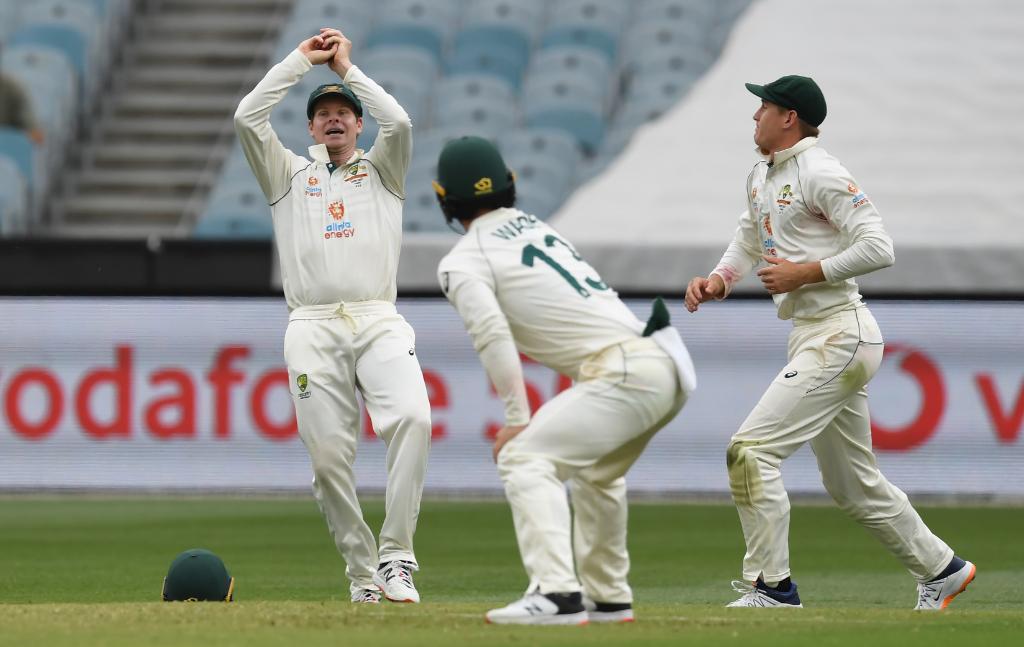
Smith drops Rahane (Image credit: AP)

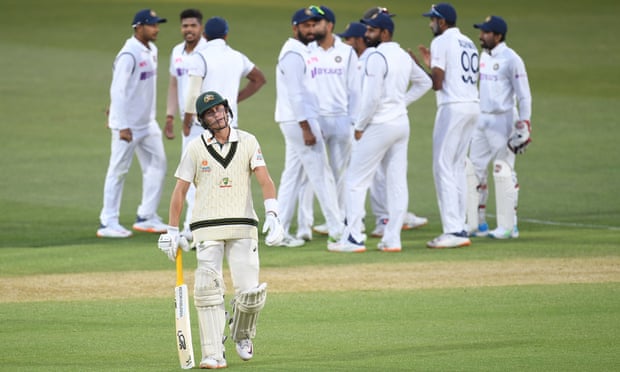
It was India’s 1st innings that had taken the game away from Australia. However, their atrocious fielding was also one of the reasons why India was able to get the momentum. The kangaroos dropped a total of 5 catches, out of which a couple of them were off the batting of Shubman Gill and Ajinkya Rahane who went on to play match-defining knocks. We seldom see such kind of performance from them.

The only positive sign for the Aussies was that they finally crossed the 200-run mark while batting in the 2nd innings in which they scored 101 runs for their last 4 wickets, a problem persisting with the Indian bowlers not cleaning up the tail quickly. However, that was not enough as India chased the target of 70-odd runs handsomely while the winning runs fittingly came from Rahane’s bat.

With their 4th win at the MCG, India has found their happy hunting ground down under. This win not only levels the series but also sets up an engrossing contest to be fought over the next two tests in 2021.

4 things for India to ponder before Boxing Day

The moment the Indian team was shot out for a mere 36 in their 2nd innings on the sunny morning of 19th December, the ghost of “4-0” and “whitewash” came back, haunting the fans.
Looking at the scoreboard some ten years down the line, people would express it as domination by the Aussies on the visitors. But as Virat Kohli himself told in the press conference, it was only that first “hour” of the play in which the dramatic collapse took place. India was ahead by the end of the 2nd day, but just within 40 minutes of the game thereafter, the game was all but lost.
Now it’s time to take that loss as one bad dream and get ready for the upcoming Boxing Day test match at Melbourne. There are some areas, though, where the Indian team think-tank needs to do some work.

The absence of Virat Kohli

Virat Kohli will hand over the responsibility to Ajinkya Rahane (Photo | AP)

Virat Kohli has traveled back to India as part of his paternity leave, so it’s now all upon Ajinkya Rahane to make a name for himself in the 2nd test match. 3 years back, in a competitive test series at home against Australia, Rahane led India to a victory in the final decider as Virat was injured after the Dharamshala test.
However, here is a different story where you go to Melbourne after being bundled out for your lowest test score in history. Apart from that, Virat Kohli against Australia brings different energy altogether in the field. Ajinkya Rahane needs to bring back that energy and intent if India wants to level the series.
Another big problem is who can replace the “batsman Virat Kohli”. Analyzing the squad, it should be KL Rahul to get the opportunity. Undoubtedly, there will be additional pressure on him as he was dropped in the Adelaide Test. But this is the time for him to step up and make a permanent name for himself in the Indian test XI.

Mohammad Shami setback

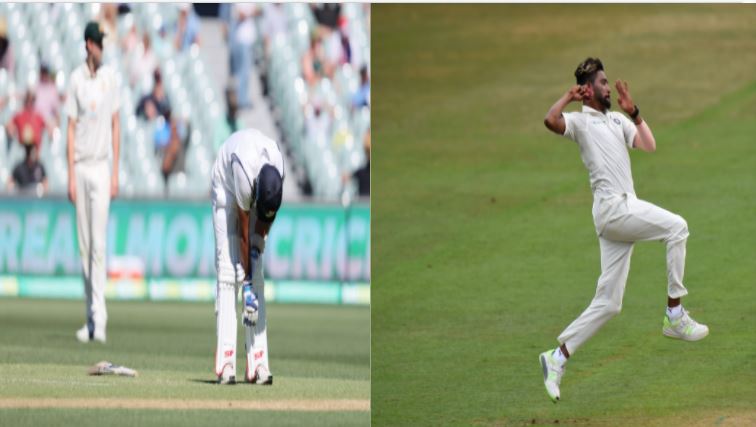
Mohammad Shami getting injured (left) . Mohmmad Siraj bowling in the practice test against Australia A (right) (getty images)

The Indian team was possibly prepared to play the 3 test matches in Virat Kohli’s absence as the leave was confirmed even before the tour had started. However, it will be challenging for the visitors to have that bowling attack now with the absence of Mohammad Shami, given the fact that he got injured and retired hurt during India’s disastrous 2nd innings.
The Indian team management has options too in the form of Navdeep Saini and Mohammad Siraj. Given the stats, Siraj holds a slight edge over the youngster from Haryana. Siraj has also bowled well in the practice matches leading up to the test series, and it seems he will get the opportunity to have a crack on the hosts.

The batting order conundrum

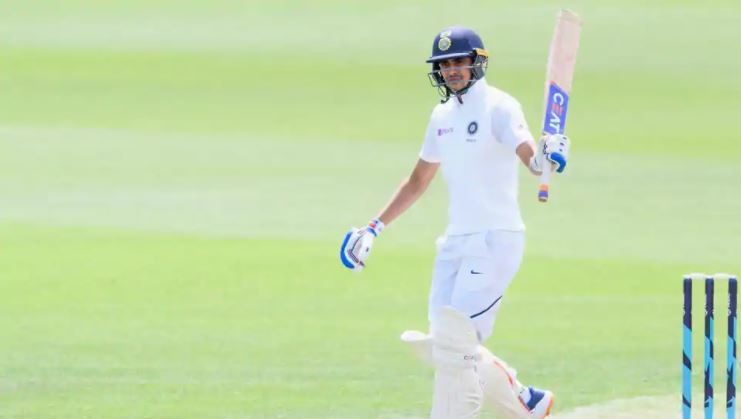
Shubman Gill during his innings for India A in New Zealand (getty images)

The absence of no.4 batsman in ODI was felt at the crucial semi-final of the 2019 world cup. After 1 year, the problem seems to have gone more in-depth with the absence of their best batsman. With Prithvi Shaw’s batting flaws getting exposed in the 1st test, I feel a replacement here is imperative in Shubman Gill’s form.
Looking at his stats, he really has good scores for India A in West Indies and New Zealand. His technique also allows him to get extra time to play some batting shots, which is very important while playing in bouncy pitches.

Bring back Ravindra Jadeja

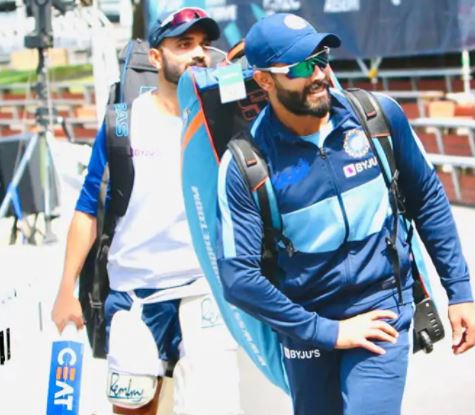
Ravindra Jadeja on his way to training

Trailing 0-1 in the series, India needs to play with five bowlers. Ravindra Jadeja can be a good option as apart from bringing variation in the bowling department, he can also score valuable runs lower down the order. His job will be to assist Wriddhiman Saha/Rishabh Pant and then, if required, anchor the tail to score crucial runs. This was one department where Australia outclassed India by scoring 112 runs for the last 5 wickets compared to India’s mere 48 in the 1st innings.
India has won three test matches at Melbourne (1977, 1981, and 2018), the most for any venues in Australia. That can be one of India’s motivations as they march on the Boxing day test match field.

Day 2: Bowlers’ day out

The pink ball test is set for another 4th day finish judging by today’s proceedings which was clearly the bowlers’ day.

Australia rips off the tail quickly

Yet again India lost wicket in the 1st over of the day’s play in the form of Ravichandran Ashwin whose bad form in test cricket continues- 28 innings without a fifty. Saha disappointed by playing a loose shot off a wide delivery from Starc in the very next over. The wicketkeeper needs to put more price on his wicket as his job will be more to play with the tailenders.

It just took 20 minutes for Australia to bundle out the visiting team who were able to add just 11 runs to their overnight total. The bowling seemed to improve as compared to the 2018/19 series as they attacked more at the stumps and making the batsman play.

Perfect reply by Indian pace battery

The trio of pacers responded well by starting with 4 maidens on the trot. Mohammad Shami was better with the ball by keeping most of the deliveries on the stumps. By the end of the first session, Jasprit Bumrah had removed both the openers – Joe Burns and Matthew Wade- who were getting troubled occassionally by the pacers.

Ashwin breaks through Australian batting

The session after dinner break saw a very cautious approach from Marnus Labushagne and Steven Smith for around 40 minutes which included just one boundary from the former. Smith did not add to his first session score as he was dismissed playing for a turn off a brilliant delivery from Ashwin who was also bowling his very first over of the series. This ball had straightened unlike the previous delivery, thus deceiving the dangerous batsman.

Ashwin looked perfect on this pitch as he was also able to extract bounce the way Lyon normally does in this part of the world. Travis Head was a victim of this as he tried to play the flick but gave a simple catch to the offspinner. Cameron Green fell to a blinder of a catch from captain Kohli diving to his right.

The Dark Horse

Umesh Yadav who looked rather bleak in the second session was brilliant in the final session making his mark by bowling a double-wicket maiden overout of nowhere. He picked up the big wicket of Labuschagne by striking him on the pads. Cummins was shown the pavilion when he tried fending away a short ball but it popped up to Rahane for a simple catch.

Prithvi Shaw finally made a mark in the test match contributing in a run out which saw the back of dangerous Mitchell Starc. The pressure of scoring runs quickly made the batsman look for the second run, leading to the dismissal. Nathan Lyon was looking good to support his captain when he pulled one off Shami towards deep mid wicket boundary. However in the very next over he lobbed a simple catch to Kohli handing Ashwin his 4th wicket.

The captain’s resilience

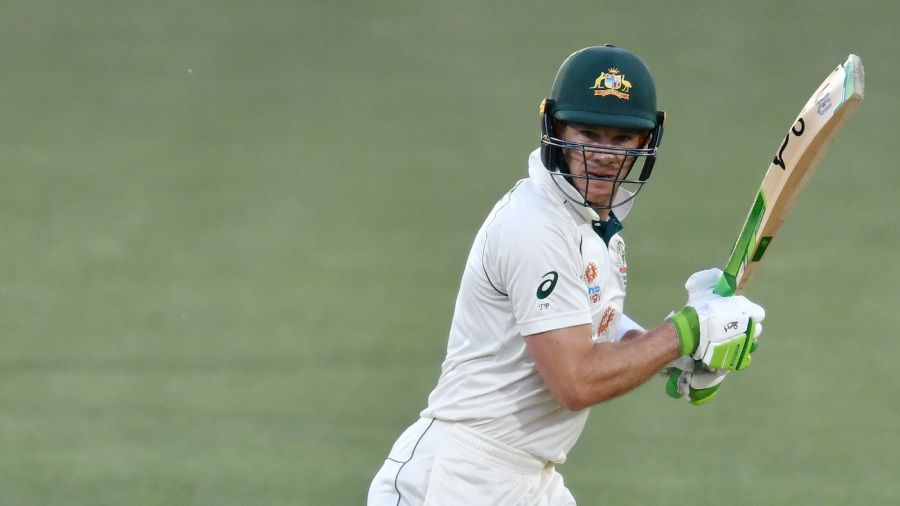
Tim Paine was the lone warrior as far as the Australian first innings was concerned. He seemed to be batting on a different pitch alltogether scoring runs at will. His innings included ten boundaries, scoring atleast one against all the Indian bowlers. He anchored the lower order batting adding 80 runs for the last 3 wickets, denting the lead down to 53 runs which at once looked above 100.

Talking points of the day:

Jasprit Bumrah provided the breakthrough in the very second over after he changed ends during his first spell.

Labuschagne’s 47 included drop catches each by Bumrah and Shaw. He was also given out caught behind off the bowling of Shami but reviewed it immediately as there was no edge. There were total 4 catch drops made by the Indian fielders, something for the management to ponder

The Australian batsmen looked like underestimating Ashwin judging by the shots played by Head and Green to which they got out. The offspinner got his best figures in Australia today.

Stage is set for another 4th day finish ?

India now lead by 62 runs with 9 wickets in hand in the second innings as Prithvi Shaw was clean bowled ending a forgettable test match for him with the bat. With the pitch becoming more suitable for the bowlers now, I think any target above 250 will be very improbable to chase. If Australia can bowl India out for a score of around 150 then we will have a very engrossing game on our hands.

Day 2 Summary

India: 244 , 9/0 [Mayank Aggarwal 5*, Jasprit Bumrah 0*] , leads by 62 runs

Pick of the batsman: Tim Paine- 73

Pick of the bowler: Ravichandran Ashwin- 4/55

Day 1: The Game Begins

If you look at the final score at stumps day 1, the first instinct you get is the similarity to the 2018 test played at the same ground. However, the inner details of the scorecard depict the Indian batsmen were not able to convert the starts which they got.

The test of the openers

Indian fans were overjoyed right from the moment Virat Kohli won the toss; India never lost a test whenever he has won the toss as captain. But just after two deliveries, Prithvi Shaw was cleaned up by Starc, and things looked quite tricky.

Mayank Aggarwal made a good start by surviving the new ball and scoring 17 runs, which included a brilliant off drive past the mid-off fielder. Pat Cummins ended his innings with a great ball curling into the batsman, a dream of a delivery. However, the credit goes to Mayank to have played the 1st hour, mainly when India lost its 1st wicket without a run on the board.

The consolidation of Indian innings

Cheteshwar Pujara batted as if he started from where he had left off 2 years back when he was the architect of India’s victory in Australia. Though there were edges off his bat twice, those soft hands and the slowness of Adelaide pitch make sure that the ball was not carried to the slips. The occasional ones and twos were more to be seen in the second session, mostly against the spinners.

Pujara consolidated the India innings together with Virat Kohli, who shared a crucial 68 run partnership. The Indian captain didn’t look comfortable throughout his innings, occasionally beaten and unable to defend a couple of short deliveries from Starc, which we are not accustomed to seeing. He was also given a huge reprieve when Australia decided against going for a review of a caught behind appeal when he was just on 16.

The run-rate during the 2nd session went above 2 after a long time when Pujara hit two consecutive boundaries off Nathan Lyon. Just when it looked like both batsmen would start to score more quickly, the spinner dismissed Pujara in his next over against the run of play.

It became essential for Ajinkya Rahane to make his mark as he will also captain the side from the next match in the absense of Kohli. Runs started to come at around 3 an over and the partnership had put India on course for a big total. They also relied on some sharp singles to keep the scoreboard moving, but who knew that this would be the cause of the captain’s wicket, which turned the game.

The Turning Point

In the 77th over, Rahane tapped to offside, and he started taking some steps but suddenly asked Kohli to return. Given our captain’s running speed, he was already halfway, and Lyon completed the formalities of hitting the stump. This wicket came at a crucial juncture because the new ball was on the cards soon.

Rahane was soon to follow after he was adjudged LBW off Starc in his 1st over with the new ball, and suddenly India, looking for a score of 300-350 sometime back, was now struggling to get even 250. Vihari’s short stint, which mostly included runs scored off edges, was ended by Hazlewood.

Talking points

Pat Cummins was the pick of the Australian bowlers. He was not at all easy to score off during the first two sessions. Nathan Lyon also purchased great turn and bounce from the Adelaide pitch that Ashwin and Vihari would also have liked, given Australia looking to bat last in the test match.

I feel Tim Paine’s decision of bringing the off-spinner early in the 2nd session is justified, given the fact that the fast bowlers will be fresh to go for the kill during the night session.

The onus will be now on wicketkeeper Wriddhiman Saha and Ravichandran Ashwin tomorrow to help India get close to 300. I guess tomorrow, the Indian bowlers would have a job on their hands to help the team get a decent lead as they did 2 years back.

Day 1 Summary

India: 233/6, 89 overs [Saha 9*, Ashwin 15*]

Pick of the batsman: Virat Kohli- 74

Pick of the bowler: Pat Cummins- 1/42

Summer Down-Under

It’s that time of the year when the red Kookaburra is raring to go once again as Australia takes on India to win back the Border-Gavaskar Trophy. The hype has been created already, and the Aussies are in their full strength. The series brings in a lot of positivity too, and that’s not just with respect to the game but in the lives of the fans as well. 2020 as we all have experienced, had very little to offer, and to be able to watch a competitive game of cricket with spectators back on the fields does give us immense joy and a ray of hope to see a better tomorrow.

This season of cricket brings in a lot of good memories too. I still remember waking up early on a chill winter morning just to see Sourav Ganguly and team take on Steve Waugh and the mighty Australian team and win a test on their home soil in the 2003/04 series. Memories of Rahul Dravid’s heroics at the Adelaide Oval, Sachin Tendulkar’s masterclass at the SCG, and the jaw dropping performances by Virender Sehwag and VVS Laxman still gives us goosebumps. But what set the tone in that series was the 144 by Ganguly at the Gabba, Brisbane announcing the arrival of an Indian team that had come to win. If India has to do well this time again, we would need someone to set the tone of the series like Ganguly did in 2003.

The Game of Pink

The first D/N Test starts tomorrow and is to be played with the Pink ball. As exciting as it seems, this is only the second time that India will be playing with the Pink Kookaburra ball while Australia has the right amount of experience with it. It is fair to say that Australia has the edge over India apart from the fact that they would be playing on their home soil.

India would be looking to make the most of the first test as it’s Virat Kohli’s final game in the tour, after which he would be on paternity leave. If India has to win this series, they cannot afford to lose the first test as things would only get worse. With no Warner in the first game, Steve Smith is the key to the Australian batting, and getting the better of him would not be an easy task.

The Playing XI

India 

Prithvi Shaw, Mayank Agarwal, Cheteshwar Pujara, Virat Kohli, Ajinkya Rahane, Hanuma Vihari, Wriddhiman Saha, Ravichandran Ashwin, Umesh Yadav, Mohammad Shami, and Jasprit Bumrah

It would have been a tough call for Kohli to leave Gill behind, looking at the kind of form he is in right now, but it would do a world of good to Prithvi Shaw’s confidence, and he should make the most of this opportunity. It seems as if the management sees Gill more as a middle-order player, which is why he probably batted at no. 3 in the Practice games. Picking Saha over Rishabh Pant wasn’t an easy choice either, but it’s good to see the management go for a wicket-keeping specialist considering the importance of the series.

The Stage is set. Let the games begin.

Design a site like this with WordPress.com
Get started