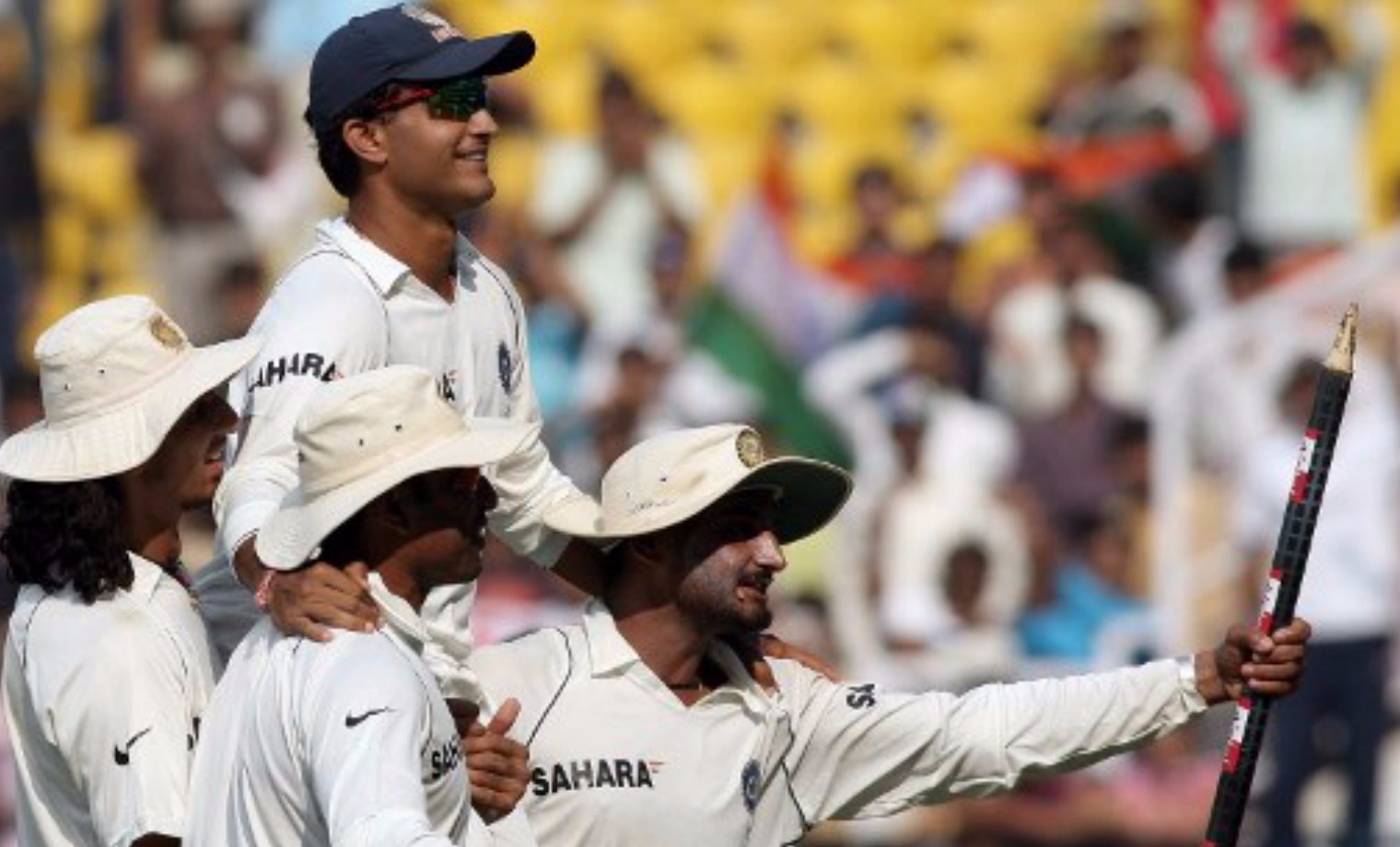
There are players whose contributions to the game are quantifiable. We use statistical methods to record their name in the history book. Then there are players whose contributions and efforts can only be known and felt through literature because they are worth much more than numbers. Sourav Ganguly is one such cricketer, whose name is obviously visible in the record books, but whose numbers do not capture the change in mindset that the man brought about when he played for India.
First Stint
A 19-year-old boy from Kolkata, India, Ganguly makes his ODI debut against the mighty West Indies in 1992. Ganguly got out scoring just 3 in 13 balls. He was just a traveler in that Indian squad, not given a chance to bat at the nets. Suddenly, one day he was asked to be ready to bat in that high intensity game against West Indies.
As Sourav wrote in his book, “A Century is not Enough”, he felt as if he was not welcome. He wrote that his teammates in the squad questioned his abilities, treated him as no one and that another player from Delhi was more deserving.
The tour had ended and Ganguly with no hope of playing for India ever again continued playing domestic cricket for Bengal. He knew that playing at the International level was tough and he was not ready, yet.
Lord’s, London – 1996
Four years had gone by and Ganguly was improving his game for Bengal. Due to unavoidable circumstances in the Indian setup, selectors were looking for an extra player for the upcoming Test Series in England. Due to the fact that Ganguly bowled part-time medium pace, he was picked in the India squad that toured England. It was believed that his bowling would help in English conditions.
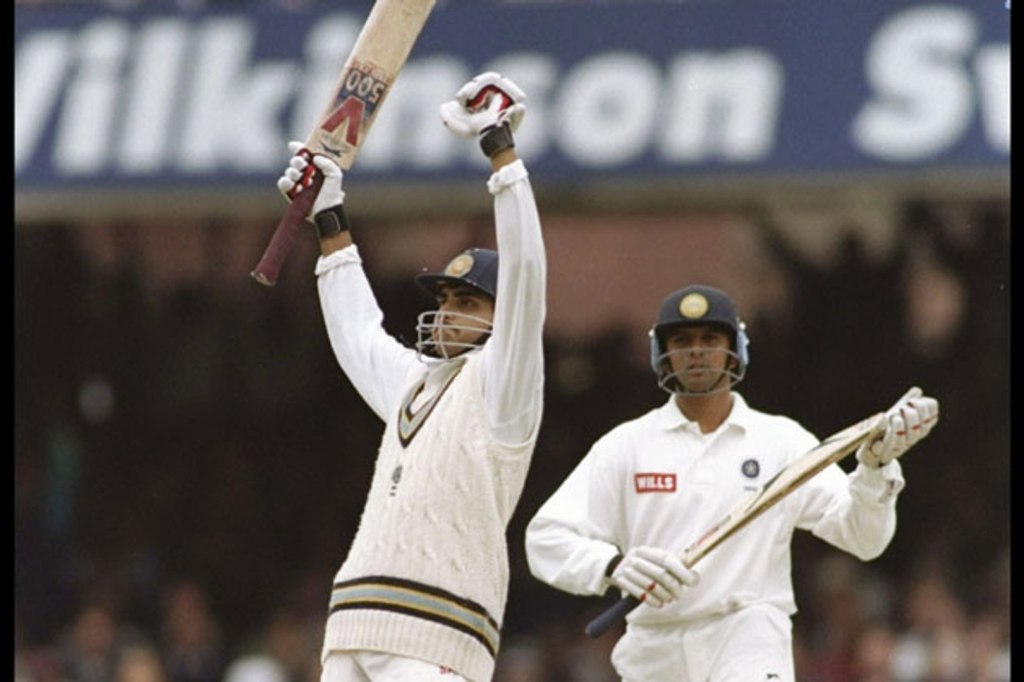
India had lost the first Test match at Edgbaston by 8 wickets. It was time for captain Azharuddin to make tough calls. The very next game at Lord’s saw the debut of two of the greatest cricketers in who changed the dimensions in which the game was played. Sourav Ganguly was back, confident and focused and along with him, it was Rahul Dravid, a true gentleman, who now gives his time to nurture youngsters in India.
Scoring 131 in the first innings, Ganguly not only announced his entrance into the International stage but answers all his critics who raised a question on his ability 4 years ago. Ganguly went on to score another century in the next match at Trent Bridge and ultimately was chosen as the man of the series for India.
There was no looking back now. Ganguly proved to be an asset for the team. After Tendulkar, the team heavily relied on Ganguly’s contributions. He was even praised by the Pakistani Legend, Imran Khan during his stint against Pakistan at Toronto, 1997.
A New Dawn
Sourav Ganguly’s biggest contribution to Indian cricket will be to save Indian cricket after the match-fixing scandal that took place during the early 2000s with the late Hansie Cronje and Azharuddin was dropped from the Indian team due to some reports of him being involved.
No night is long enough to not see the dawn. Sachin Tendulkar had already stepped down from captaincy and the onus was on India’s second-best batsmen during the late 90s, Sourav Ganguly. On his first press conference as captain, I remember Sourav mention, “we will play clean cricket”. Indian cricket did not look back ever since. It is time we give Sourav Ganguly the due credit for playing a pivotal role at such a crucial moment in Indian cricket history.
Cricket in India wouldn’t be this successful if it were not because of the fans. Harsha Bhogle had once said that since Ganguly took over as captain, the quality of cricket that India played for the next couple of years brought the fans back, made them pilgrims of the game, believers of the game again. This is the biggest contribution of Sourav Ganguly towards Indian cricket.
Eden Gardens, Calcutta – 2001
The Indian team back then was known to be strong at home but were termed as just visitors when they toured overseas. Sourav’s vision was to change this mentality.
Changes were made to the squad; young players like Yuvraj Singh, Virender Sehwag, Zaheer Khan, and Harbhajan Singh were not only picked but nurtured by the captain. Especially Virender Sehwag, who was a middle-order batsman was promoted to open the innings. As it turns out, he is considered one of the best openers in Test Cricket. The aggressive mindset that they were not going to be bullied and that they were going to play competitive cricket made India look threatening. Anil Kumble had once said to Sourav, “You taught us how to win matches abroad”.
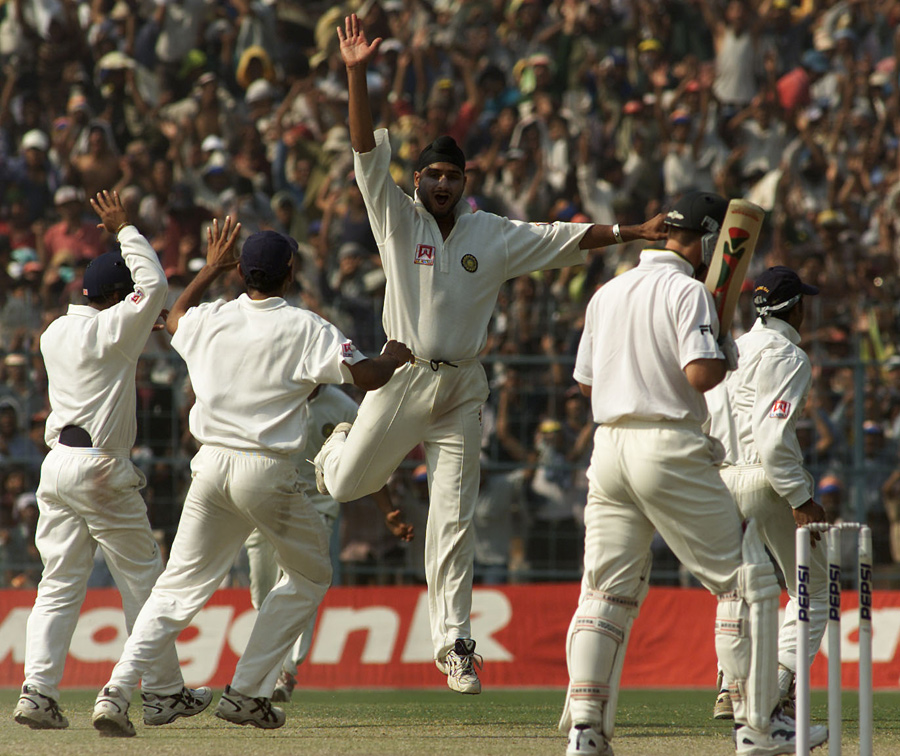
2001 will be remembered as the revolutionary turn-around in Indian cricket history when India defeated Steve Waugh’s Australian Team in a home Test Series 2-1. Before the start of the series, Ganguly fought with the selection committee for the inclusion of Harbhajan Singh into the side who went to become the highest wicket-taker in the series with a hattrick at Eden Gardens.
After losing the first Test in Bombay, they came back strongly, winning in Calcutta at the iconic Eden Gardens. It was a Test which is often referred to as one of the best Test matches in the history of Test cricket. Ganguly and his team finally sealed the series in Chennai. Steve Waugh, the Australian Captain, had termed that series as the final frontier which was later conquered by Australia in the series in 2004 led by Adam Gilchrist.
Lord’s, London – 2002
Losing the finals in away games was becoming an issue for Ganguly and team. In the tri-series in England between India, England and Sri Lanka, India and England had made it to the finals at Lord’s. England had scored a mammoth 325 and chasing such scores in those days was unheard of. Ganguly and Sehwag were off to a flier. Due to loss of quick wickets, victory seemed difficult but excellence was displayed by Yuvraj Singh and Mohammad Kaif and India ended up creating history in England.
Ganguly was not able to control his emotions and in reply to Andrew Flintoff’s actions in the Wankhede Stadium in Mumbai, Ganguly took off his shirt in the balcony at the Lord’s dressing room and waved with extreme passion.

Ganguly’s team did not look back. The aggressive model worked really well for the team and India went on to play finals of the 2003 ICC World Cup. They lost to the best team during that period, Australia.
144 at Gabba, Brisbane – 2003
Ganguly knew that the tour of Australia will not be easy. He took permission from the BCCI Chief and made sure that he prepared for the series in Australia. He requested Greg Chappell to help him with his batting. Ganguly’s preparation reflected in India’s overall performance in that test series down under.
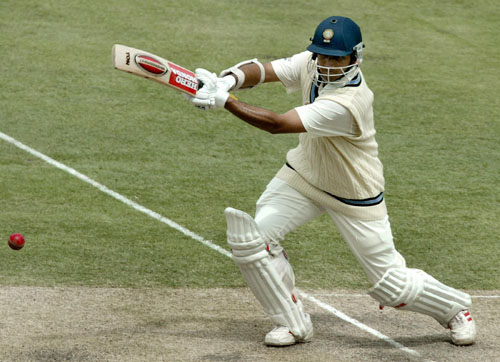
The first test was played at Gabba, Brisbane. The playing condition at Gabba was completely bowling friendly. Ganguly was sledged with the term, ‘sweet chin music’. It was a known fact to all that Ganguly had trouble facing the short-pitched balls. India was in trouble in the first test match with 4 wickets down when Ganguly treated the crowd with a century which was a fitting reply to all the sledging non-sense. The century set the tone of the rest of the series and it got the Steve Waugh led Australian team really focus. The world knew the series was open.
The Selectors were not keen on keeping Anil Kumble in the squad. Ganguly put his career at stake in order to get Kumble into the team. The selection meeting went on for quite some time. Selectors finally agreed on having Kumble in the team under a condition that if India doesn’t do well then Ganguly will have to give up his captaincy. In the end, India drew the series 1-1 and retained the Border-Gavaskar Trophy while Anil Kumble was the highest wicket-taker for India.
Rough Patch
India under Ganguly went on to win their first-ever series in Pakistan. A significant mark for the Indian team and the fans. The tenure of the Indian coach, John Wright was coming to an end. Ganguly had a nice time with Greg Chappell back in Australia and he felt like Chappell could be a good addition to the Indian setup. But it wasn’t the case. Ganguly was dropped as captain and dropped from the Indian team due to non-cricketing reasons. It was true that Ganguly’s performance was dropped significantly. But the reason for being dropped was quite clear.
Greg Chappell had his own vision for the team which was not at all in line with Ganguly’s. Playing the villain’s role, Chappell managed to create his own Indian Team and Rahul Dravid was made the captain. India started to falter. Chappell philosophy did not work with the culture in India. Indian players were confused with their roles in the team. A gem of a bowler like Irfan Pathan was ruined by multiple roles that Chappell gave him. Things were not right.
Come Back
Almost a year in exile, Ganguly promised himself, that he will give cricket another try. After days of hard work and determination, Ganguly was recalled in the Indian team that toured South Africa. Ganguly’s score of 51 not out backed up by excellent bowling from Sreesanth helped India register their first-ever Test match win in South Africa. Ganguly ended up being the highest run-getter for India in that series. He was back.
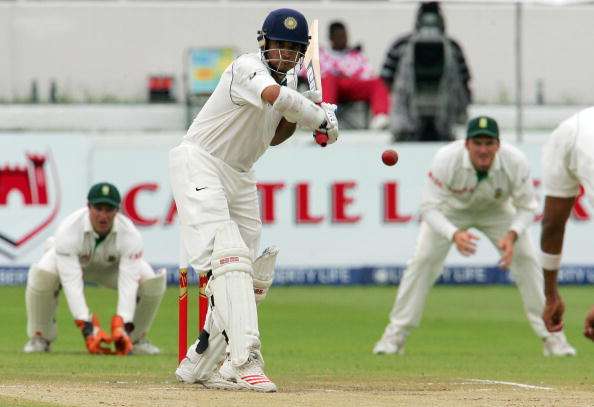
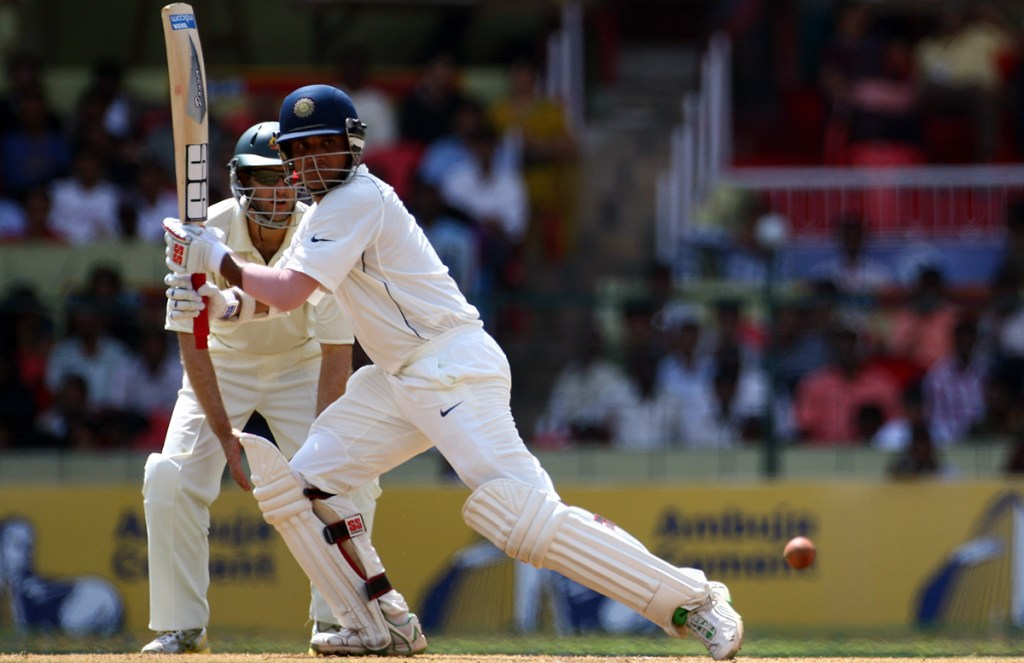
Sachin Tendulkar once said that the Ganguly of 2006, during his comeback was the best Ganguly he ever saw. Post comeback, Ganguly averaged above 60 in Tests. He was the second-highest run-getter in Test Cricket in 2007.
Disappointed with the selection committee, Ganguly decided to hang his boots in 2008 on a high. Scoring a century in his final test series against Australia and a Bradmanesque duck in his final innings.
What can we learn from him?
There is a lot to learn from Ganguly with respect to leadership, vision, focus and hard work. Ganguly’s leadership model involved giving the youngsters a chance for a longer time period. He wanted his team to feel secure. If you are a manager of a company and you tell your employee to show performance else, they would be fired, your employees would never perform to the potential. It is extremely important that we give the players or any newcomer in any field enough chance and support such that their actual talent starts flourishing.
This is what the CEO of Microsoft, Satya Nadella had to say about him: “The leadership values I learned while playing cricket in India helped me compete vigorously in the face of uncertainty — putting the team first and bringing out the best in everybody. I liked Sourav Ganguly’s style of leadership. Your individual abilities are important, but the ability to bring out the best in others is more important.”
He also taught us to dream big. It’s not just if you can dream it, you will get it but, it’s about being honest about your dreams and working hard to achieve it. There is no substitute for hard work.
 Cow Corner
Dada will never retire from our hearts.
This article revived my childhood. Great work!
LikeLike
Very informative blog👌
LikeLike